Blog Post
IMO Resolution MSC.559(108): New Lifeboat Maintenance Requirements Now in Force
Posted By: Harsh Bamnolia
Posted On : 15-Apr-2026
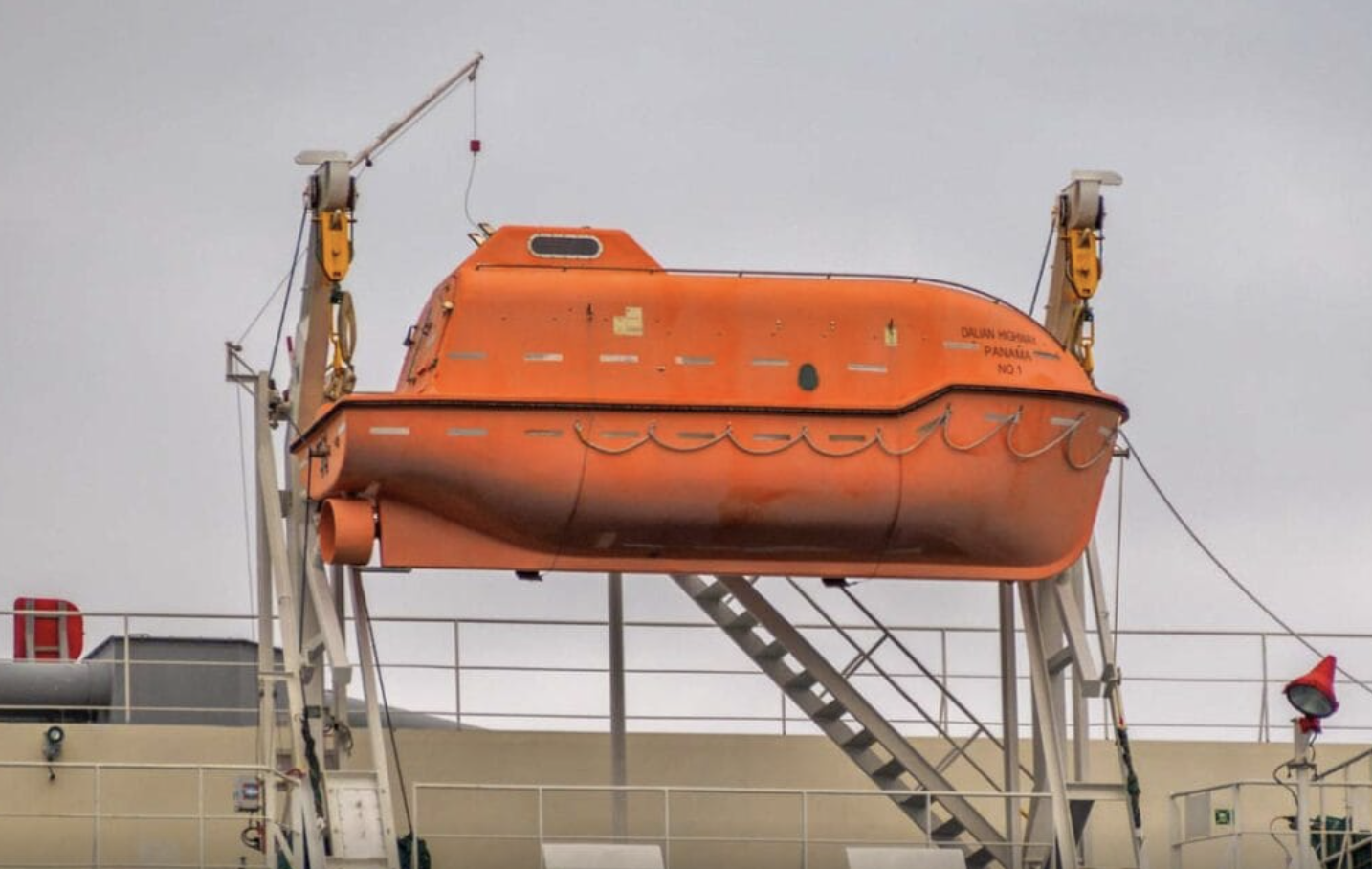
IMO Resolution MSC.559(108): New Lifeboat Maintenance Requirements Now in Force
Most ship managers know that lifeboat maintenance requirements were significantly overhauled in 2020 under IMO Resolution MSC.402(96). Far fewer are aware that those requirements were further strengthened by IMO Resolution MSC.559(108), adopted at the 108th session of the Maritime Safety Committee in May 2024. The resolution is now fully in force, and PSC officers across the Indian Ocean MOU and Tokyo MOU are actively checking vessels against its requirements in 2026.
This matters because MSC.559(108) is not a minor administrative update. It introduces a specific new technical requirement for lifeboat ventilation systems and reinforces the requirement that lifeboat servicing be conducted exclusively by manufacturer-authorised, class-recognised providers. Both changes have direct, practical implications for ship owners, and both are now subject to PSC inspection.
This article explains exactly what MSC.559(108) changed, why it was introduced, and what ship owners and superintendents need to do to ensure their vessels are compliant.
Background: Why IMO Strengthened Lifeboat Maintenance Rules
The regulatory tightening that produced MSC.402(96) in 2020 and MSC.559(108) in 2024 has its roots in a series of fatal lifeboat accidents over the preceding two decades — incidents where crew members were killed or seriously injured during routine lifeboat drills, most commonly due to accidental release of the on-load release hook while the boat was suspended or being lowered.
Investigations into these accidents repeatedly identified the same underlying causes: lifeboats serviced by technicians without proper manufacturer training, maintenance records that did not reflect the actual condition of safety-critical components, and on-load release gear that had been improperly maintained, modified, or repaired using non-original parts. IMO's response was to progressively close the gaps that allowed substandard servicing to occur — first with MSC.402(96), which established the modern annual and five-yearly inspection regime, and then with MSC.559(108), which addressed remaining gaps identified through continued incident investigation.
What MSC.559(108) Changed: Ventilation Requirements
The most significant technical change introduced by MSC.559(108) is a new requirement for ventilation systems on totally enclosed lifeboats, amending paragraphs 4.6.6 and 4.6.7 of the LSA Code.
Totally enclosed lifeboats must remain sealed during launch and operation to protect occupants from fire, smoke, and toxic fumes — particularly important on tankers where lifeboats may need to pass through burning oil on the water surface. But a sealed environment creates its own risk: without adequate ventilation, carbon dioxide can accumulate to dangerous levels and temperatures can rise to the point of heat exhaustion, particularly in a fully loaded lifeboat in tropical conditions.
MSC.559(108) sets a specific, measurable ventilation standard. Totally enclosed lifeboats must now provide a minimum ventilation capacity of 5 cubic metres per hour per person, sustained for a minimum of 24 continuous hours of operation. Ventilation controls must be operable from inside the lifeboat by the occupants, and the ventilation system must maintain its watertight integrity even when the lifeboat is fully submerged — without relying on the boat's engine or battery system to function, since both could fail during an emergency.
For ship owners, this means existing lifeboats need to be assessed against the new standard. Many older lifeboats, particularly those built before the LSA Code amendment came into force, were not designed with this specific ventilation capacity in mind. Where an assessment finds a lifeboat's existing ventilation system does not meet the 5 m³ per hour per person standard, a retrofit or system upgrade is required.
What MSC.559(108) Changed: Service Provider Authorisation
The second significant change reinforces and clarifies the requirement, first established under MSC.402(96), that lifeboat annual inspections must be conducted by properly authorised personnel. MSC.559(108) closes interpretive gaps that had allowed some service providers in various regions — including parts of the Indian market — to present themselves as qualified without holding genuine manufacturer authorisation.
Under the strengthened requirement, the person conducting the annual thorough examination must satisfy two conditions simultaneously: certification and training by the lifeboat or davit manufacturer, or their officially designated representative, specific to the make and model of equipment being inspected, and recognition by a classification society or the flag state administration.
This closes a loophole that previously existed in practice, if not in strict legal text — local technicians with general marine engineering experience but no manufacturer-specific training conducting lifeboat inspections and issuing certificates that were, in a strict legal sense, never compliant. PSC officers in 2026 are specifically trained to ask for evidence of both qualifications, not simply accept a certificate at face value.
Practical Implications for Ship Owners
The combined effect of these two changes creates specific action items for ship owners and superintendents operating vessels calling at Indian ports and across the Indian Ocean MOU and Tokyo MOU regions.
First, review your fleet's lifeboat ventilation systems against the new 5 m³ per hour per person standard. This assessment should ideally be conducted as part of the next scheduled annual inspection or five-yearly overhaul, where a qualified engineer can physically test the existing ventilation capacity and advise whether the lifeboat meets the standard or requires modification.
Second, verify the authorisation status of your current lifeboat service provider against both conditions required under MSC.559(108) — manufacturer authorisation for the specific lifeboat brand and class society or flag state recognition. If your current provider cannot produce both certificates without hesitation, your vessel's service record may not be compliant even if it has passed previous inspections without incident.
Third, update your vessel's planned maintenance system to reflect the ventilation assessment requirement going forward, ensuring it is checked at every annual inspection rather than treated as a one-time exercise.
Fourth, communicate the change to your DPA and safety management system documentation. Since ISM-related deficiencies are always detainable, ensuring your shore-based safety management procedures explicitly reference MSC.559(108) compliance demonstrates to a PSC officer that the requirement is being actively managed rather than overlooked.
How PSC Officers Are Checking MSC.559(108) Compliance
PSC officers across the Indian Ocean MOU and Tokyo MOU regions are now incorporating MSC.559(108) checks into routine lifeboat inspections. In practice, this means an officer conducting a detailed LSA inspection may ask to see the ventilation system specification for the lifeboat, request evidence that ventilation capacity has been assessed against the new standard, and review the annual inspection certificate specifically to confirm it identifies the authorising engineer's manufacturer certification and class recognition, not merely a generic signature and stamp.
A vessel that cannot produce this evidence is at risk of a deficiency finding even if the lifeboat itself is in good physical condition — because the deficiency relates to documentation and assessment, not necessarily to a physical fault. This is precisely the kind of finding that ship managers can avoid entirely with proactive preparation, since it requires no physical repair, only proper documentation and a compliant service history.
Frequently Asked Questions
Does MSC.559(108) apply to all existing lifeboats or only new installations?
It applies to all SOLAS vessels. New lifeboats ordered after the amendment's effective date must meet the ventilation standard at build. For existing lifeboats, the requirement is that ventilation capacity be assessed at the next scheduled survey, with retrofits required where the existing system does not meet the standard.
How do we know if our lifeboat's ventilation system meets the new standard?
A qualified engineer conducting your annual inspection or five-yearly overhaul can physically test the ventilation system's airflow capacity and confirm whether it meets the 5 m³ per hour per person requirement. If you are uncertain whether your fleet's lifeboats have been assessed, raise this specifically with your service provider at the next scheduled service.
What happens if our lifeboat ventilation system does not meet the standard?
A remediation plan must be agreed with your classification society. This typically involves either retrofitting an upgraded ventilation system to the existing lifeboat or, in cases where retrofit is not feasible, replacement of the lifeboat. Your class society will advise on the appropriate timeline and approach based on your vessel's specific circumstances.
Is there a grace period for compliance with MSC.559(108)?
Class societies have generally provided implementation guidance with assessment deadlines tied to scheduled surveys rather than an immediate blanket deadline. However, since the resolution is already in force and PSC officers are actively checking for compliance, ship owners should not wait for a formal deadline to begin the assessment process.
How does MSC.559(108) affect our choice of lifeboat service provider?
It reinforces that your service provider must hold both manufacturer authorisation for your specific lifeboat brand and class society or flag state recognition. If you have not verified these two qualifications independently for your current provider, do so before your next scheduled service. Read our guide to choosing a certified lifeboat service provider in India.
Does Marinetech assess lifeboat ventilation systems against MSC.559(108)?
Yes. Marinetech's annual and five-yearly lifeboat inspections include assessment of ventilation system compliance against the MSC.559(108) standard, and our engineers can advise on remediation options where an existing system does not meet the requirement.
Ensure Your Fleet Is MSC.559(108) Compliant
Contact Marinetech Safety & Shipping Corporation to schedule a lifeboat inspection that includes assessment against the latest IMO requirements, including MSC.559(108) ventilation compliance. We operate at all major Indian ports with DG Shipping approved, manufacturer-authorised engineers.
Services email: info@marinetechss.com
Phone: +91-8866475732 | +91-72270 38216
Get a Free Quote for Lifeboat Servicing
Related reading: SOLAS Lifeboat Requirements 2026: Complete Guide | Certified Lifeboat Servicing in India 2026 | Annual vs 5-Yearly Lifeboat Inspection | Common Lifeboat PSC Deficiencies & How to Fix Them