Blog Post
Marine Navigation & Communication Equipment Supplier in India: Complete Guide for Ship Managers
Posted By: Harsh Bamnolia
Posted On : 25-Jun-2026
Marine Navigation & Communication Equipment Supplier in India: Complete Guide for Ship Managers
When navigation or communication equipment on a ship fails, the vessel has a limited window to source a replacement before it creates a compliance problem. A defective AIS transponder must be repaired or replaced before the next port of call. An ECDIS that fails during a voyage requires an alternative navigation arrangement that may restrict where the vessel can trade until the system is restored. A VHF radio set that stops functioning at anchor leaves the vessel without the primary communication channel for port operations.
For ship managers and procurement teams sourcing navigation and communication equipment for vessels calling at Indian ports, the practical requirements are straightforward: the equipment must be type-approved for the vessel's flag state and class society, it must be compatible with the existing installation on board, it must be available quickly at or near the port of call, and it must be supplied with documentation that satisfies the surveyor updating the Safety Equipment Certificate or Safety Radio Certificate.
This guide covers the navigation and communication equipment Marinetech supplies to vessels across India, the type-approval and certification requirements that apply to each equipment category, and how to order efficiently from any major Indian port.
The Difference Between Navcom Equipment Supply and GMDSS Survey
Before covering the equipment categories, it is worth clarifying the distinction between navcom equipment supply and GMDSS radio surveys — because ship managers frequently conflate the two and this leads to incorrect assumptions about what is needed.
A GMDSS radio survey is a service — an annual inspection and testing of all radio communication equipment fitted on the vessel, conducted by an authorised surveyor, resulting in the endorsement of the Safety Radio Certificate. It verifies that existing equipment is working correctly. Read our complete guide to GMDSS radio surveys in India.
Navcom equipment supply is the procurement of the physical hardware — the AIS transponder, the ECDIS unit, the VHF radio, the Inmarsat terminal. It happens when existing equipment fails, when equipment reaches the end of its service life, when the vessel upgrades its navigation suite, or when a deficiency found during a GMDSS survey requires a replacement unit. The survey and the supply are complementary services — Marinetech provides both.
AIS Transponders
The Automatic Identification System is mandatory on all SOLAS vessels of 300 GT and upward on international voyages, all cargo ships of 500 GT and upward, and all passenger ships regardless of size. AIS continuously transmits the vessel's identity, position, course, speed, and other voyage data to other vessels and shore-based vessel traffic services in the area.
SOLAS Regulation V/19.2.4 specifies the carriage requirement, and IMO Resolution MSC.74(69) sets the performance standards for Class A AIS transponders — the standard required for SOLAS vessels. Class B transponders are used on smaller vessels not subject to the mandatory carriage requirement.
AIS transponders fail more frequently than ship managers expect — because they operate continuously, 24 hours a day, 365 days a year, in a salt-laden marine environment. Antenna connector corrosion, power supply faults, and GPS receiver failures are the most common failure modes. When an AIS fails, it must be repaired or replaced before arrival at the next port where PSC inspection is possible — a vessel with a non-functional AIS is immediately detainable.
Marinetech supplies Class A AIS transponders from type-approved manufacturers compatible with the IMO performance standard. When ordering a replacement AIS, provide the vessel's MMSI number and the existing installation's antenna configuration so we can confirm compatibility with the vessel's bridge layout and antenna system. We also carry the required programming equipment to configure the replacement unit with the vessel's correct MMSI, vessel name, IMO number, and voyage data before it is installed.
ECDIS — Electronic Chart Display and Information System
ECDIS is mandatory for cargo ships of 10,000 GT and above, cargo ships of 3,000 GT and above, tankers of 500 GT and above, and passenger ships of 500 GT and above — with implementation phases that have now brought virtually all affected vessels into compliance. New vessels in all categories must be fitted with ECDIS as a condition of class.
The ECDIS must be type-approved by the flag state administration against the IMO performance standard (Resolution MSC.232(82)). Not all ECDIS type approvals are equal — a type approval from one flag state administration is not automatically accepted by another. Before supplying or fitting a replacement ECDIS unit, the type approval status of the unit for the vessel's flag state must be confirmed.
ECDIS type approval also requires periodic software updates from the manufacturer to maintain the approval's validity. An ECDIS running software that has fallen behind the manufacturer's current approved version is operating outside its type approval — a deficiency that is increasingly being identified by PSC officers and class surveyors. When sourcing a replacement ECDIS, confirm the current software version and the manufacturer's update status for the flag state.
Marinetech supplies ECDIS units from approved manufacturers and can advise on type approval status for specific flag states. We also supply the S-57 and S-63 licensed electronic navigation charts (ENCs) required for ECDIS operation, and can arrange ECDIS training for officers unfamiliar with a new unit — because an ECDIS that the crew cannot operate correctly is a navigation hazard as serious as no ECDIS at all.
VHF Radio Sets
VHF radiotelephone sets are the primary communication tool for all vessel-to-vessel and vessel-to-shore communication at sea and in port. SOLAS requires a fixed VHF installation with DSC capability on Channel 70, and the Safety Radio Certificate specifies the number of portable VHF sets the vessel must carry.
Portable VHF sets fail regularly — primarily due to battery degradation, water ingress, and physical damage from the harsh shipboard environment. Depleted batteries that cannot hold a charge make the set non-functional for emergency use even if the radio itself works. PSC officers test portable VHF sets during LSA and GMDSS inspections and will note sets that are discharged or non-functional.
Marinetech stocks portable VHF sets from SOLAS-approved manufacturers at all major Indian ports. We also stock replacement battery packs for the most common portable VHF models found on vessels calling at Indian ports — in many cases, a battery replacement restores a set that would otherwise need to be replaced entirely. When ordering portable VHF sets, confirm the quantity specified in the vessel's Safety Equipment Certificate and Safety Radio Certificate to ensure the full complement is maintained.
Inmarsat and Iridium Satellite Communication Terminals
Satellite communication terminals — Inmarsat Fleet Broadband, VSAT systems, Inmarsat C, and Iridium terminals — are used for crew communications, vessel tracking, weather data, route optimisation, and increasingly for machinery monitoring and remote diagnostics. For SOLAS GMDSS purposes, Inmarsat C or equivalent is required for distress alerting and maritime safety information reception in Sea Areas A3 and A4.
Satellite communication equipment failures are disruptive beyond the immediate communication impact — they affect the vessel's connectivity for all digital services, including electronic chart updates, weather routing, and shore-side data systems. Lead times for satellite terminal repairs or replacements are typically longer than for other navcom equipment, making proactive maintenance more important for SATCOM than for most other systems.
Marinetech can source and supply Inmarsat and Iridium terminals, coordinate installation and commissioning at Indian ports, and arrange activation of new terminals with the relevant service providers. Where a SATCOM failure is creating a GMDSS compliance gap, contact us urgently with the vessel's details and the nature of the failure so we can advise on the fastest resolution path at the relevant Indian port.
NAVTEX Receivers
NAVTEX is the system by which maritime safety information — weather forecasts, navigational warnings, search and rescue notices, and ice reports — is broadcast automatically to vessels within range of a NAVTEX transmitter. SOLAS requires a NAVTEX receiver on all vessels operating in areas where a NAVTEX service is provided.
NAVTEX receivers are generally reliable but fail occasionally, typically due to antenna or antenna cable faults rather than receiver electronics. A non-functional NAVTEX receiver is a deficiency finding during a GMDSS survey and a PSC inspection. Marinetech carries NAVTEX receivers and antenna components in stock at major Indian ports for rapid replacement.
Radar Systems
Radar is mandatory under SOLAS Regulation V/19 for all vessels of 300 GT and upward on international voyages. The performance standard for shipborne radar (IMO Resolution MSC.192(79)) specifies minimum requirements for radar range, discrimination, accuracy, and display. Most vessels of 3,000 GT and above are required to carry two independent radar systems.
Radar failures are typically not total failures — they manifest as reduced performance, loss of specific functions, or degradation in range or discrimination that is noticed during watchkeeping but not immediately incapacitating. However, a radar that is not meeting the minimum performance standard under the applicable IMO resolution is non-compliant, and a vessel with only one operational radar on a route requiring two is technically non-compliant.
Radar repair and replacement is a more complex service than replacing a portable VHF set — it requires installation in a specific location, antenna mounting above the wheelhouse, and integration with the vessel's AIS and ECDIS systems where ARPA overlay and chart radar functions are in use. Marinetech provides radar supply and installation at Indian ports. Contact us with the vessel's radar specifications and the nature of the fault so we can advise on the most efficient repair or replacement approach at your port of call.
Ordering Navcom Equipment from Marinetech in India
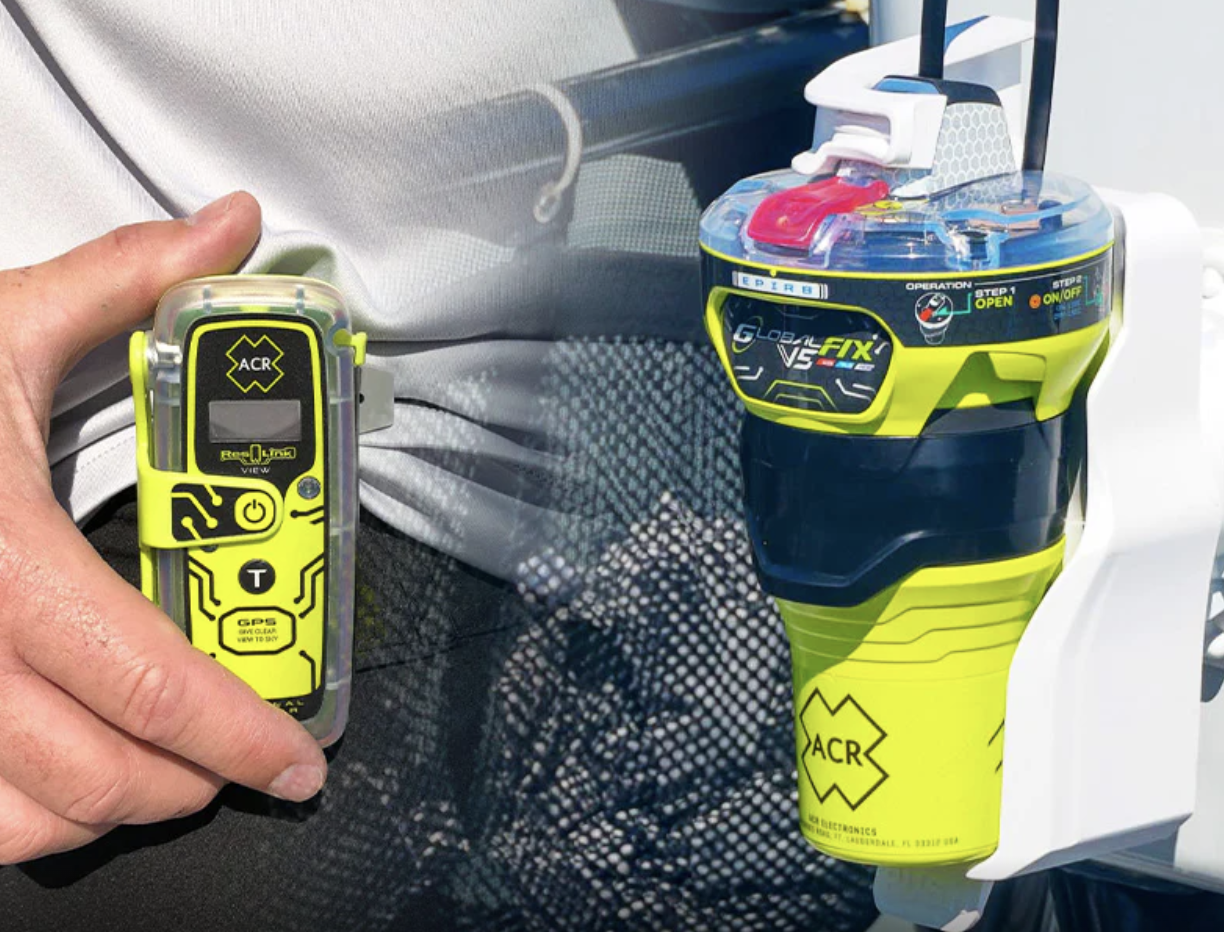
Marinetech supplies the full range of navigation and communication equipment to vessels at all major Indian ports. Our supply network covers Mumbai, JNPT, Kandla, Mundra, Hazira, Dahej, Cochin, Goa, Chennai, Vizag, Kolkata, Haldia, and Paradip. Common items — portable VHF sets, AIS transponders, NAVTEX receivers, portable VHF batteries, and EPIRB replacement units — are held in stock at major ports for rapid delivery to the berth.
For equipment requiring sourcing, installation, and commissioning — ECDIS units, radar systems, Inmarsat terminals — we provide a lead time estimate at the time of order confirmation so you can plan around the vessel's trading schedule.
To order, provide the vessel name, IMO number, flag state, port and expected arrival date, the specific equipment required including make and model where known, and any type-approval constraints specific to your flag state. We confirm availability, lead time, and pricing within 24 hours. Contact our supplies team to place an order.
All navcom equipment we supply is sourced from type-approved manufacturers with documentation confirming conformance to the applicable IMO performance standard — the documentation that must accompany any new equipment installation for the Safety Radio Certificate or Safety Equipment Certificate to be updated. View our navcom equipment supply range.
Frequently Asked Questions
Does the replacement equipment need to be the same brand as the existing installation?
Not necessarily. The replacement must meet the same type approval standard as the equipment it replaces — the same IMO performance standard and the same flag state approval. It does not need to be the same brand. However, integration with existing systems — ECDIS, AIS, VDR — may require compatibility checks before a different brand is installed. Contact us with your existing installation details and we will advise on compatible replacement options.
Can Marinetech install the equipment it supplies?
Yes. For navcom equipment requiring installation and configuration — AIS transponders, ECDIS, radar, Inmarsat terminals — Marinetech provides installation alongside supply. Our electronics engineers are experienced in shipboard system integration and can configure new equipment to interface with existing navigation and communication systems.
What documentation comes with supplied navcom equipment?
Every item we supply is accompanied by the type approval certificate, the manufacturer's declaration of conformance, and the installation and commissioning documentation required to update the vessel's Safety Radio Certificate or Safety Equipment Certificate. We also provide the manufacturer's operation and maintenance manual as standard.
How quickly can Marinetech supply a replacement AIS transponder in India?
For Class A AIS transponders held in stock at our major port locations, delivery to the berth can typically be arranged within 24 hours. For models not immediately in stock, we provide a specific lead time at the time of order.
Does a new ECDIS require new chart licences?
Yes. An ECDIS replacement requires new chart licences for the ENC service provider — the existing licences are typically tied to the previous unit's hardware identifier. Marinetech can supply and activate the required chart licences alongside the ECDIS unit to ensure the replacement is fully operational before the vessel sails.
Should we replace failed navcom equipment before or after the next port of call?
Where the failed equipment is mandatory under SOLAS and its absence creates a compliance deficiency, it must be replaced or temporarily compensated for before arriving at any port where PSC inspection is possible. Contact us as soon as equipment failure is identified so we can prepare the replacement at your destination port rather than working against a deadline after arrival.
Order Marine Navigation & Communication Equipment in India
Contact Marinetech Safety & Shipping Corporation to source navigation or communication equipment for your vessel at any major Indian port. Our supplies team responds to all enquiries within 24 hours.
Supplies email: supply@marinetechss.com
Phone: +91-8866475732 | +91-72270 38216
View Our Navcom Equipment Supply Range
Related reading: GMDSS Radio Survey in India 2026 | VDR & S-VDR Annual Performance Test in India 2026 | Life Saving Equipment for Ships: SOLAS Requirements | Choosing a DG Shipping Approved Marine Company in India