Blog Post
VDR & S-VDR Annual Performance Test in India 2026: Complete Guide for Ship Owners
Posted By: Harsh Bamnolia
Posted On : 15-Apr-2026
VDR & S-VDR Annual Performance Test in India 2026: Complete Guide for Ship Owners
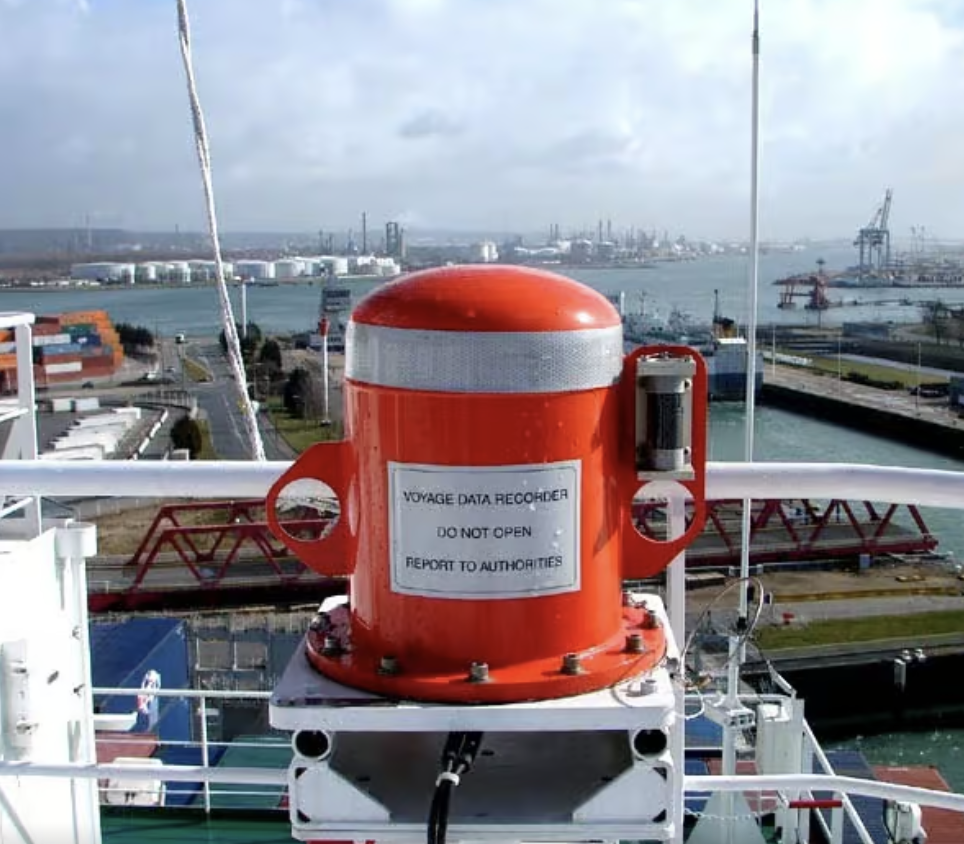
A Voyage Data Recorder is a ship's equivalent of an aircraft's black box. In the aftermath of a collision, grounding, fire, or any other serious maritime casualty, the VDR provides investigators, flag states, insurers, and courts with an objective record of exactly what happened on the bridge in the hours and minutes before the incident — speed, heading, radar data, bridge audio, GMDSS communications, and more. SOLAS makes it mandatory on most commercial vessels precisely because it provides evidence that cannot be disputed, lost, or rewritten.
What is less well understood — and what catches vessels out during PSC inspections across Indian ports — is that a VDR installed on board is not the same as a VDR that works. The equipment must pass an annual performance test conducted by an authorised service engineer, and that test must produce a certificate that confirms every data input, the protective capsule, and the replay system are all functioning correctly. Without a current Annual Performance Test (APT) certificate, the vessel's VDR is non-compliant for SOLAS purposes regardless of how new the equipment is.
This guide covers what SOLAS requires for VDR and S-VDR compliance in 2026, what the APT involves, how S-VDR and VDR requirements differ, and how Marinetech delivers certified VDR testing across all major Indian ports.
What SOLAS Requires for VDR and S-VDR
SOLAS Regulation V/20 sets out the carriage requirements for Voyage Data Recorders and Simplified Voyage Data Recorders. The requirement applies based on vessel type and gross tonnage, with different implementation dates that have phased in the requirement across the global fleet over time.
Passenger ships on international voyages must carry a full VDR regardless of build date. Cargo ships of 3,000 GT and upward constructed on or after 1 July 2002 must carry a VDR. Cargo ships of 3,000 GT and upward constructed before 1 July 2002 — a large portion of the current world fleet — must carry either a full VDR or an S-VDR, with the S-VDR accepted as the minimum standard for this category. Cargo ships of 20,000 GT and upward on international voyages constructed before 1 July 2002 were brought into the requirement with mandatory S-VDR installation, making full VDR or S-VDR carriage now effectively universal for vessels above 3,000 GT on international voyages.
The Annual Performance Test is mandated under SOLAS Regulation V/20 as read with IMO Performance Standards for VDRs (Resolution MSC.333(90)) and for S-VDRs (Resolution MSC.163(78)). The test must be conducted at intervals not exceeding 12 months by a manufacturer-authorised service engineer or an entity recognised by the flag state administration or class society. The resulting APT certificate must be retained on board and presented on demand during class surveys and PSC inspections.
VDR vs S-VDR: What Is the Difference?
Ship managers frequently encounter confusion about the difference between a full VDR and an S-VDR — and the difference matters both for carriage requirement purposes and for understanding what the APT covers.
A full VDR records a comprehensive dataset including position, speed, heading, bridge audio, communications audio, radar data, AIS data, depth, wind speed and direction, hull stress and watertight door status on applicable vessels, and more. The data must be stored in a protected recording medium — the final two hours of data on a device designed to withstand fire, flooding, and impact from ship sinking. The full VDR is the gold standard for casualty investigation because it provides the most complete picture of events before an incident.
An S-VDR records a reduced but still significant dataset — position, speed, heading, bridge audio, and communications. It uses a simplified protective capsule compared to the full VDR. The S-VDR was introduced as a cost-effective alternative for older cargo ships where the full VDR installation was disproportionately expensive relative to the vessel's value, while still providing investigators with the core data needed to understand most casualty scenarios.
The APT process covers both types but involves different test parameters reflecting the different recording requirements and protective capsule specifications of each system. When booking a VDR test in India, confirm whether your vessel carries a full VDR or an S-VDR so the engineer attends with the correct test software and equipment.
What the Annual Performance Test Covers
The VDR Annual Performance Test is a systematic check of every component of the recording system — from the sensors and interfaces that feed data into the recorder, through the recording medium and protective capsule, to the replay system that allows the data to be extracted and read after a casualty. Here is what Marinetech's authorised VDR engineers cover during every APT.
Sensor and Interface Verification: Every data input to the VDR is tested to confirm it is feeding correct, accurate data into the recording system. This includes position data from GPS, speed and heading data from the gyrocompass and speed log, depth from the echo sounder, wind data from the anemometer, radar data from the connected radar systems, and AIS data. Any sensor that is not feeding data correctly into the VDR is a deficiency — the VDR may be running and recording, but it is recording incomplete data.
Bridge Audio: The microphone coverage of the bridge is tested to confirm that audio from all required positions on the bridge — the compass platform, the radar positions, and the communications stations — is being captured at adequate quality. Bridge audio is often one of the most forensically valuable data channels in a casualty investigation, and microphone failures or poor audio quality are among the most common VDR deficiencies found during APT.
Communications Audio: VHF communications made from the bridge are verified to be recorded. The interface between the radio equipment and the VDR is tested to confirm all channels are being captured.
Protective Capsule: The float-free capsule or fixed capsule that contains the final two hours of recorded data is inspected. For full VDRs, the capsule must meet specific fire resistance, water pressure, and impact survivability standards. The capsule's sealing integrity is checked. Where the capsule includes a battery-powered locating beacon, the battery is tested.
Recording Continuity and Capacity: The VDR's recording system is tested to confirm it is maintaining the rolling two-hour (or 12-hour on newer systems) recording loop correctly and that the recording medium has sufficient capacity.
Replay System: The data replay system is tested to confirm that recorded data can be successfully extracted and read. This is the step that confirms the VDR is not just recording data but recording it in a format that can actually be used in a casualty investigation. A VDR that records data that cannot be replayed is functionally worthless.
Playback Verification: A sample of recorded data is played back through the replay software to verify that position, speed, heading, audio, and other data channels are all rendering correctly.
Documentation Review: The engineer reviews the VDR's maintenance log, checks the software version against the current manufacturer-approved version, and reviews any fault or alarm history since the last APT.
At the conclusion of the test, the engineer produces the APT certificate identifying the vessel, the VDR or S-VDR make and model, the serial number, the date of the test, the specific items tested and their results, any deficiencies found, and the name and authorisation reference of the engineer. This certificate is retained on board alongside the Safety Equipment Certificate.
Common VDR Deficiencies Found During PSC Inspections
The most commonly cited VDR-related deficiency at Indian ports is an APT certificate that is beyond its 12-month validity — typically because the test was deferred or missed during a busy operational period. The second most common is a sensor interface failure — most frequently a radar data feed or AIS data feed that has stopped working since the last APT without anyone noticing, since VDR sensor failures do not trigger bridge alarms in most installations. The third is a bridge audio deficiency — a microphone that has failed or been obscured, resulting in incomplete audio coverage of the bridge.
Less common but serious findings include a protective capsule that has been physically damaged and not reported, a replay system that fails during the APT because the recording medium is corrupted, and software that has fallen behind the current manufacturer-approved version to the point where the system is no longer functioning to its approved specification.
VDR Brands Marinetech Services in India
Marinetech's authorised VDR engineers are qualified to conduct Annual Performance Tests on all major VDR and S-VDR brands commonly found on vessels calling at Indian ports. These include JRC, Furuno, Consilium, Kelvin Hughes, Danelec, L3 Technologies (now part of AMSYS), Raytheon Anschütz, and others. When booking, provide the VDR make and model so we can confirm engineer authorisation for your specific system and ensure the correct test software is available before your vessel arrives in port.
Scheduling the VDR APT Alongside Other Services
The VDR Annual Performance Test can typically be scheduled as part of the same port call as a GMDSS radio survey, lifeboat inspection, liferaft servicing, or fire fighting appliances service. Combining multiple compliance services in a single Marinetech port call eliminates the coordination overhead of managing separate service providers and produces consolidated documentation for class surveys and PSC review. Contact us to arrange a combined service schedule for your next Indian port call.
Ports Where Marinetech Provides VDR Testing in India
Marinetech provides certified VDR and S-VDR Annual Performance Testing across all major Indian ports. On the west coast we cover Mumbai and JNPT, Kandla and Mundra, Hazira and Dahej, Cochin, and Goa. On the east coast we cover Chennai and Ennore, Visakhapatnam (Vizag), Kolkata and Haldia, and Paradip. For ports not listed, contact us with advance notice.
Frequently Asked Questions
How often must the VDR Annual Performance Test be conducted?
Every 12 months. The APT certificate must be current at all times. There is no grace period equivalent to the 17-month rule for liferafts — the VDR APT must be within 12 months at every class survey and PSC inspection.
Who is authorised to conduct the VDR Annual Performance Test in India?
The test must be conducted by a manufacturer-authorised service engineer or an entity recognised by the flag state administration or classification society. A general marine electronics engineer without specific VDR manufacturer authorisation cannot produce a compliant APT certificate. Verify your test engineer's authorisation before booking.
What happens if the VDR fails the Annual Performance Test?
If a deficiency is found during the APT — a sensor interface failure, an audio deficiency, a capsule problem — the engineer will advise on the rectification required. The APT certificate cannot be issued until all deficiencies are resolved. In most cases, straightforward deficiencies such as sensor interface failures or software updates can be resolved during the same service visit.
Does the VDR APT need to be recorded in the Safety Equipment Certificate?
The APT certificate is retained on board separately from the Safety Equipment Certificate. However, VDR compliance is verified during the Safety Equipment Survey conducted by the class society, and the APT certificate must be available for review at that survey. Ensure the APT certificate is filed in the vessel's compliance documentation where it can be produced quickly during class surveys and PSC inspections.
Is a Simplified VDR (S-VDR) sufficient for all cargo vessels?
For cargo ships of 3,000 GT and above constructed before 1 July 2002, an S-VDR meets the minimum SOLAS requirement. For cargo ships constructed on or after 1 July 2002, a full VDR is required. Passenger ships on international voyages must carry a full VDR regardless of build date. Confirm your vessel's specific carriage requirement with your flag state or class society if uncertain.
Can Marinetech supply a replacement VDR or S-VDR if the existing system is found beyond economic repair?
Marinetech can advise on replacement options and supply type-approved VDR and S-VDR systems through our navcom equipment supply network. Where a replacement is required, we can manage the installation, commissioning, and initial performance test as part of a complete replacement package. View our navcom and electronic navigation equipment service.
Book a VDR Annual Performance Test in India
Contact Marinetech Safety & Shipping Corporation to schedule your VDR or S-VDR Annual Performance Test at any major Indian port. Provide the vessel name, VDR make and model, and expected arrival date and port and we confirm engineer availability and timing within 24 hours.
Services email: info@marinetechss.com
Phone: +91-8866475732 | +91-72270 38216
Get a Free Quote for VDR Annual Performance Testing
Related reading: GMDSS Radio Survey in India 2026 | How to Prepare for a PSC Inspection: Checklist 2026 | Certified Lifeboat Servicing in India 2026 | Top 10 PSC Deficiencies That Lead to Ship Detention