Blog Post
Life Raft Launching Procedure: Step-by-Step Guide for Safe Emergency Deployment
Posted By: Harsh Bamnolia
Posted On : 01-Aug-2023
Why the Life Raft Launching Procedure Matters
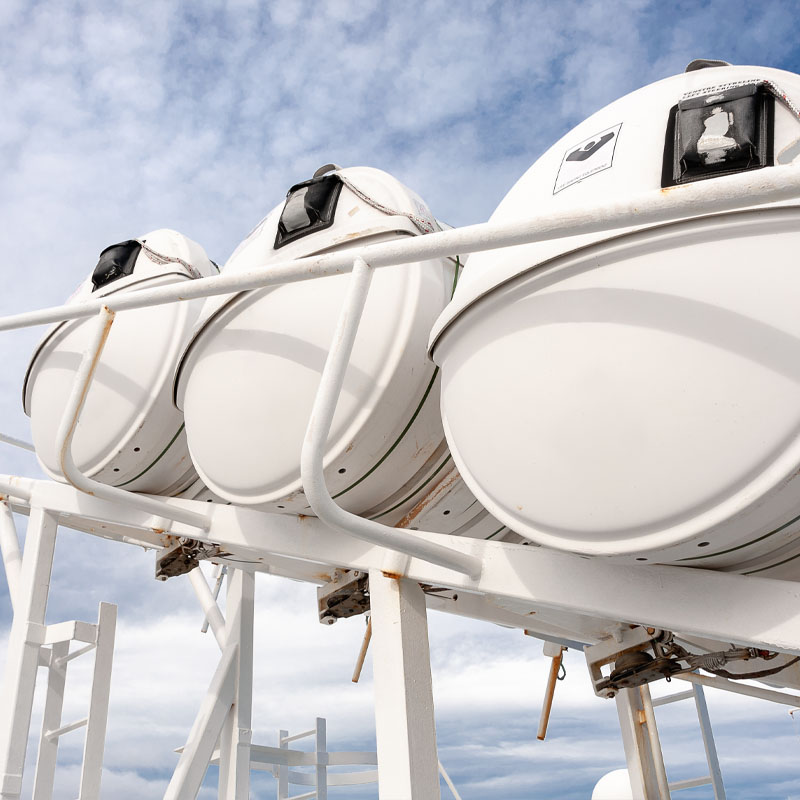
Launching life raft is one of the most critical emergency procedures aboard any vessel. In a fire, collision, or sinking, a correctly executed life raft launching procedure ensures the life raft inflates properly, remains stable and functions as a survival station until rescue arrives. Every crew member should be able to execute this procedure calmly and confidently under pressure.
Understanding the Role of Life Rafts in Maritime Safety
Life rafts are a mandatory part of a ship's life saving appliances (LSA). providing crew with a safe means of survival during vessel abandonment. A correctly performed launch is what stands between a controlled evacuation and a life-threatening situations making life raft launching training a non-negotiable part of crew safety drills.
There are two primary types of liferaft launching systems used onboard ships: Throw overboard liferafts and davie launched liferafts. Each follows a distinct deployment process, outlined below.
Throw Overboard Life Raft Launching Procedure
Throw overboard life rafts are designed to be thrown into the water, where they inflate automatically on contact.
Step 1: Pre-Launch Preparation
Before launching a throw overboard life raft, complete this pre-launch checklist:
Crew Accountability: Confirm that every crew member is present and accounted for.
Safety Gear: Ensure life jackets and immersion suits are worn to protect against cold water exposure
Communication: Establish clear communication and assign roles for the launch.
Grab Bag: Prepare a grab bag with flares, first-aid kits, and emergency rations.
Step 2: Locate and Ready the Life Raft
Identify the life raft's stowage location and confirm it is easily accessible. Verify that the painter line (the line containing the life raft to the ship) is clear of obstructions before deployment.
Step 3: Deployment
- Remove all securing straps or covers so the life raft can float freely.
- Throw the life raft overboard on the windward side of the vessel to prevent entanglement.
- Allow the life raft to inflate automatically on contact with water.
Step 4: Boarding the Life Raft
- Use the boarding ladder or designated entry point to climb aboard
- Assist crew members who are injured or in distress
- Confirm everyone is safely aboard before proceeding
Step 5: Lifeboat Safety Onboard
- Assign roles: leader, radio operator and lookout
- Check the grab bag for emergency equipment and supplies
- Use distress signals, flares and communication devices to signal for help
- Minimize movement to keep the life raft stable and prevent capsizing
- Administer first aid to injured or seasick crew members
Step 6: Awaiting Rescue
- Maintain regular communication with authorities and nearby vessels
- Use flares, whistles and signaling devices to attract rescuers
- Stay calm, panic increases risk in survival situations
- Conserve food and water until rescue arrives
Davit Launched Life Raft Launching Procedure
Davit launched life rafts are lowered into the water using onboard davit equipment, offering a more controlled deployment method.
Step 1: Pre-Launch Preparation
Confirm all crew are present and wearing life jackets and immersion suits.
Establish communication and assign launch roles.
Prepare the grab bag with flares, first-aid kits, and emergency rations.
Step 2: Locate and Ready the Life Raft
Identify the davit launched life raft's location and confirm the painter line is clear of obstructions and ready for deployment.
Step 3: Deployment
Activate the davit system to lower the life raft into the water.
Step 4: Boarding the Life Raft
Climb into the life raft via the boarding ladder or designated entry point, assisting fellow crew members as needed.
Step 5: Life Raft Safety Onboard
Assign crew roles, check the grab bag, and keep the life raft stable and afloat.
Step 6: Awaiting Rescue
Maintain communication with authorities and nearby vessels, use signaling devices, stay calm and conserve.
Throw-Overboard vs. Davit Launched Life Rafts: Quick Comparison
| Feature | Throw-Overboard Life Raft | Davit-Launched Life Raft |
| Deployment Method | Manually thrown into water | Lowered via onboard davit |
| Inflation | Automatic on water contact | Automatic on water contact |
| Best Suited for | Smaller vessels, quick evacuation | Larger vessels with davit systems |
| Boarding Point | From water level or ladder | Often boarded before lowering |
| Control Level | Less controlled descent | More controlled, steady lowering |
Liferaft Safety Priorities After Launch
Regardless of life raft type, survival after deployment depends on:
1. Signaling for rescue using flares, whistles and communication devices
2. Conserving resources - food, water and battery powered equipment
3. Maintaining stability by minimizing unnecessary movement
4. Providing first-aid to injured or distressed crew members
5. Staying calm and organized under assigned roles
Marinetech's Life Raft Inspection and Servicing Support
At Marinetech Safety Pvt. Ltd., we understand that a life raft is only as reliable as its maintenance. We offer comprehensive life raft inspection and servicing to ensure your life rafts are always in optimal, deployment-ready condition helping ships stay compliant with SOLAS and flag-state requirements.
Frequently Asked Questions (FAQs)
Q. What is the difference between a throw-onboard and davit launched life raft?
A. A throw-overboard life raft is manually thrown into the water and inflates on contact, while a davit launched life raft is lowered into the water using an onboard davit system for a more controlled descent.
Q. What should be included in a life raft grab bag?
A. A grab bag typically includes flares, a first-aid kit, emergency rations, signaling devices and other essential survival items for use while awaiting rescue.
Q. Which ports does Marinetech provide life raft servicing at?
A. Marinetech Safety Pvt. Ltd. provides authorized life raft servicing at major ports across India, including Mumbai, JNPT, Kandla, Mundra, Pipavav, Dahej, Hazira, Goa, Mangalore, Kochi, Chennai, Ennore, Vishakhapatnam, Paradip, Haldia, Kolkata, Tuticorin, Dhamra, Kakinada, Vadinar and Sikka.
Conclusion
The life raft launching procedure is a life saving skill every crew member must master. Whether deploying a throw-overboard or davit launched life raft, proper preparation, clear communication and calm execution significantly improve survival outcomes during a vessel abandonment emergency.
Contact Marinetech Safety Pvt. Ltd. for professional life raft inspection and servicing that keeps your vessel SOLAS compliant and rescue ready.
Service Email: info@marinetechss.com
Phone: +91 8866475732 | +91 7227038216
Related Reading: SOLAS Life Raft Requirements 2026: Capacity, Types and Carriage Rules Explained | Life Raft Servicing in India 2026: Complete Guide for Ship Owners