Blog Post
The Complete Guide to SOLAS Pyrotechnic Regulations for Ships and Safety
Posted By: Harsh Bamnolia
Posted On : 22-Oct-2023
Why SOLAS Pyrotechnic Regulations Exist
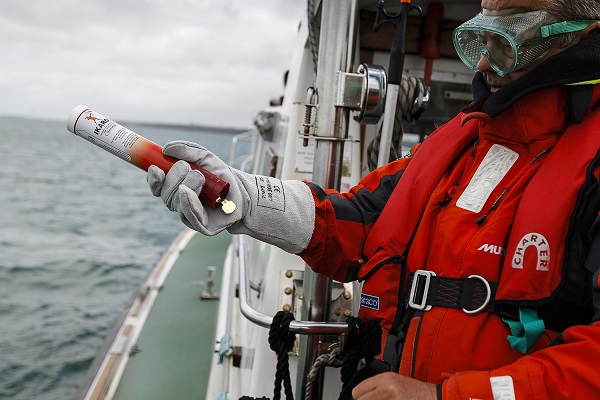
The Safety of Life at Sea (SOLAS) Convention is the foundational international treaty governing maritime safety and its provisions on pyrotechnics rank among the most safety-critical. Flares and related signaling devices are a vessel's most reliable way to indicate distress when radio communication fails, is delayed or simply isn't enough to attract attention. SOLAS pyrotechnic regulations exist to guarantee that every vessel regardless of size, flag or trade route carries functional, compliant signaling equipment capable of getting help when it's needed most.
5 Types of Pyrotechnics Recognized Under SOLAS
SOLAS compliant vessels rely on five main categories of pyrotechnic distress signaling equipment, each serving a distinct purpose:
1. Hand Flares
Handheld pyrotechnic devices that emit a bright, colorful flame when ignited, used to signal distress or pinpoint a vessel's exact location at close range.
- Typical Specification: Bright red flame for at least 60 seconds at 15,000 candela
- Best for: Close-range signaling to nearby rescuers or vessels
2. Parachute Rocket Flares
Fired into the sky, these rockets reach significant heights before deploying a parachute, producing a powerful, long-range visible signal.
- Typical Specification: Ejected to approximately 350m altitude; red flame for at least 40 seconds at 30,000 candela
- Best for: Long distance distress signaling, especially in open water
3. Smoke Floats
Smoke floats produce dense orange smoke on the water's surface, helping rescue teams visually locate and reach a distressed vessel quickly.
- Typical Specification: Dense orange smoke for at least 3 minutes
- Best for: Daytime location marking near the vessel
4. Man Overboard (MOB) Markers
MOB markers serve a dual signaling purpose, producing dense orange smoke for daytime visibility and emitting a steady light for nighttime visibility, making them essential for man-overboard emergencies.
- Typical Specification: Orange smoke visible for approximately 15m, combined with a light lasting 2+ hours.
- Best for: 24 hour visibility marking of a person or object in the water
5. Line Throwing Apparatus (LTA)
Though not a traditional flame or smoke based pyrotechnic, LTA is grouped with SOLAS signaling and rescue equipment because it enables a secure line connection to another vessel or the shore for rescue or towing purposes.
- Typical Specification: Throws a line up to 300 meters.
- Best for: Establishing rescue or towing lines in emergency situations.
Pyrotechnic Types at a Glance
| Type | Approval | Function | Key Specification |
| Hand Flares | SOLAS/MED | Close range distress signal | 60+ sec at 15,000 candela |
| Parachute Rocket Flares | SOLAS/MED | Long range distress signal | 350m altitude, 40+ sec at 30,000 candela |
| Smoke Floats | SOLAS/MED | Daytime location marker | 3+ min dense orange smoke |
| MOB Markers | SOLAS/MED | Day/night man overboard signal | 15m smoke + 2+ hours light |
| Line Throwing Apparatus | - | Rescue/towing line connection | Throws up to 300m |
SOLAS Requirements for Pyrotechnics
Beyond defining pyrotechnic types, SOLAS lays down strict operational requirements to ensure these devices remain effective in an emergency.
Quantity
Vessels must carry an adequate number of hand flares and parachute rocket flares, with exact quantities determined by vessel size, class and voyage type.
Storage
Pyrotechnics must be stowed in easily accessible locations, under storage conditions that prevent moisture damage, physical deterioration or accidental activation.
Expiration Dates
Pyrotechnic chemical components degrade over time. SOLAS requires regular replacement of expired flares and signaling devices to guarantee reliability when deployed.
Crew Training
Crew must be trained in the correct handling, activation and deployment of each pyrotechnic type, ensuring effective use under pressure during a real emergency.
Maintenance
Routine inspection and maintenance of stowed pyrotechnics is required to confirm they remain functional and undamaged.
Disposal
Expired pyrotechnics must be disposed of safely and in accordance with environmental regulations, given their chemical composition and potential marine ecosystem impact.
Why SOLAS Compliance Matters?
Ensuring Effective Distress Signaling: SOLAS pyrotechnic rules exist to guarantee vessels can reliably call for help, with signals visible from considerable distances even in poor visibility or rough seas.
Complying with International Law: SOLAS is a binding international treaty. Non-compliance can result in penalties, port state detainment or vessel detention.
Protecting Lives at Sea: Compliant pyrotechnic equipment gives crews a dependable way to signal for help, directly improving survival odds during an emergency.
Avoiding Environmental Impact: Proper disposal of expired pyrotechnics, as SOLAS mandates, helps the environmental footprint of these chemical based devices on marine ecosystems.
Who's Responsible for SOLAS Pyrotechnic Compliance?
Meeting SOLAS pyrotechnic requirements is a shared responsibility across the maritime supply chain:
| Stakeholder | Responsibility |
| Shipowners | Equip vessels with required quantities, ensure proper storage/maintenance, provide crew training, arrange safe disposal of expired stock |
| Crew Members | Understand activation procedures, correct timing of use and safe handling/disposal of expired devices |
| Maritime Authorities | Conduct inspections, oversee compliance and enforce penalties for non-adherence |
| Pyrotechnic Suppliers | Manufacture and supply flares and signaling devices that meet SOLAS specifications |
Frequently Asked Questions (FAQs)
Q. What pyrotechnic are required on ships under SOLAS?
A. SOLAS compliant vessels typically carry hand flares, parachute rocket flares, smoke floats, man overboard (MOB) markers and often a line-throwing apparatus, with exact quantities depending on vessel size and voyage type.
Q. What is the difference between a hand flare and a parachute rocket flare?
A. A hand flare is a handheld device used for close-range distress signaling, while a parachute rocket flare is fired to significant heights and deploys a parachute for a highly visible, long-range signal.
Q. Why do SOLAS flares and pyrotechnics have expiration dates?
A. Pyrotechnic devices contain chemical components that degrade over time, reducing reliability. SOLAS mandates regular replacement of expired units to ensure they function correctly during an emergency.
Q. Is a line throwing apparatus considered a pyrotechnic under SOLAS?
A. While it doesn't use flame or smoke, the line throwing apparatus is grouped with SOLAS distress and rescue signaling equipment because of its critical role in establishing emergency line connections.
Q. How should expired pyrotechnics be disposed of?
A. Expired pyrotechnics must be disposed of safely under environmental regulations rather than as standard waste, due to their chemical composition and potential marine ecosystem impact.
Conclusion
SOLAS pyrotechnic regulations exist for one reason: to make sure every vessel can call for help effectively when it matters most. From the five recognized pyrotechnic types to the rules governing quantity, storage, training and disposal, compliance is a shared responsibility spanning shipowners, crew, authorities and suppliers alike. Visit Marinetech Safety Pvt. Ltd. for a complete range of certified flares, smoke signals and rescue signaling equipment built to international maritime safety standards.
Service Email: info@marinetechss.com
Phone: +91 8866475732 | +91 72270 38216
Related Reading: Ensuring Safety at Sea: 5 Essential Pyrotechnics for Ships