Blog Post
Ensuring Safety at Sea: 5 Essential Pyrotechnics for Ships
Posted By: Harsh Bamnolia
Posted On : 07-Aug-2023
Why Pyrotechnics are Essential Maritime Safety Equipment
Whether aboard a commercial vessel or a recreational boat, preparedness is everything when emergencies strike at sea. Pyrotechnics for ships are among the most critical distress-signaling tools onboard, designed to alert nearby vessels, aircraft and rescue services when radio communication fails or is unavailable. This guide breaks down the five must-have pyrotechnic devices every ship should carry.
Why Pyrotechnics Matter for Maritime Safety
Pyrotechnic devices emit highly visible signals that serve as a universal distress call recognized worldwide. Here's why they remain essential aboard every vessel:
Here's why they are indispensable:
Universal Distress Signal: When radio communication is compromised or ineffective, pyrotechnics provide an instantly recognizable visual signal that alerts nearby vessels, aircraft and rescue services to a ship in distress.
High Visibility: Designed to emit bright flames or dense smoke, pyrotechnics remain visible from considerable distances, day or night, even in adverse weather conditions.
Swift Rescue Response: A successfully deployed distress signal significantly speeds up rescue response times, which can be the deciding factor in saving lives during a maritime emergency.
The 5 Essential Pyrotechnics for Ships
1. Hand Flares
Hand flares are handheld devices that emit a bright red flame, offering high visibility during both day and night. They are essential for pinpointing the exact location of a distressed vessel and are known for their easy, safe handling.
Specifications:
Approval: SOLAS/MED/USCG/CE Approved
Features: Easy and safe handling, fired from the cold side for added safety, bright red flame for at least 60 seconds at 15,000 candela
Hand flares are fired from the cold side of the device, adding an extra layer of operator safety, while their sustained bright red flame ensures visibility from a considerable distance.
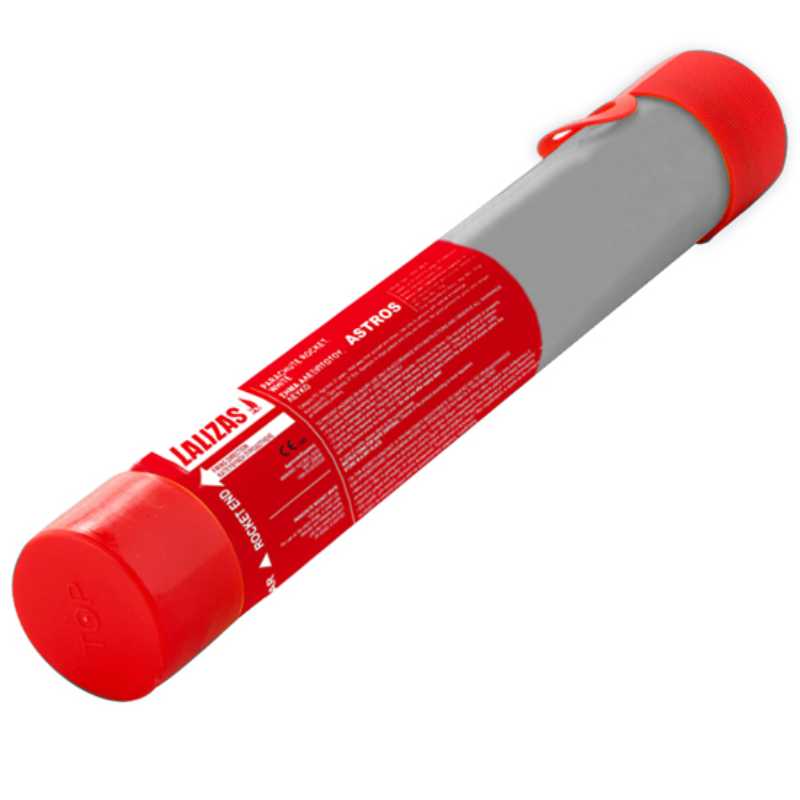
2. Parachute Rocket Flares
Parachute rocket flares are built to reach significant heights when fired, ensuring a wide, long range visible signal, making them ideal for signaling distress over long distances, even in poor weather.
Specifications:
Approval: SOLAS/MED/USCG/CE Approved
Features: Easy and safe handling, flare ejected at 350m for a extended viewing range, fired from the cold side for added safety, bright red flame for at least 40 seconds at 30,000 candela
A deploying parachute allows these flares to reach heights of up to 350 meters, while the sustained bright red flame delivers a clear, unmistakable distress signal.
3. Buoyant Smoke Signals
Buoyant smoke signals are invaluable for marking a distressed vessel's exact location on the water. They release dense orange smoke visible from a considerable distance, helping rescue teams locate and reach the vessel quickly.
Specifications:
Approval: SOLAS/MED/USCG/CE Approved
Features: Easy and safe handling, small and lightweight, dense orange smoke lasting at least 3 minutes
Compact and lightweight, these devices are easy to deploy, even in challenging conditions, providing a reliable distress marker when it matters most.
4. MOB (Man Overboard) Smoke Signals
MOB (Man Overboard) smoke signals serve a dual purpose; dense orange smoke for daytime visibility and a steady light for nighttime visibility, making them an essential tool for man overboard emergencies at sea.
Specifications:
Approval: SOLAS/MED Approved
Features: Emergency signal or positioning marker for day and night use; dense orange smoke visible for 15m; light output for at least 2 hours
This day and night combination ensures a man overboard casualty can be located and tracked regardless of lighting conditions.
5. Line Throwing Apparatus
While not a traditional pyrotechnic, the line-throwing apparatus is a critical piece in maritime safety equipment, used to launch a line to another vessel or to shore for secure rescue or towing connections.
Features:
Throws a line up to 300 meters
Easy to use
Robust, waterproof construction
Integral handle for secure grip
Its 300 meter throwing range and rugged, waterproof design make it a reliable tool across a range of rescue and towing scenarios.
Quick Comparison: Ship Pyrotechnics at a Glance
| Pyrotechnic | Approval | Key Function | Burn/Visibility Time |
| Hand Flares | SOLAS/MED/USCG/CE | Pinpoint vessel location | 60+ sec at 15,000 candela |
| Parachute Rocket Flares | SOLAS/MED/USCG/CE | Long-distance distress signal | 40+ sec at 30,000 cane |
| Buoyant Smoke Signals | SOLAS/MED/USCG/CE | Mark vessel location | 3+ minutes of orange smoke |
| MOB Smoke Signals | SOLAS/MED | Day/night man overboard signal | 15m smoke/2+ hours light |
| Line Throwing Apparatus | - | Line connection for rescue/towing | Throws up to 300m |
Sourcing SOLAS Approved Pyrotechnics from Marinetech
At Marinetech Safety Pvt. Ltd., we supply a comprehensive range of SOLAS/MED/USCG/CE approved pyrotechnics and safety equipment engineered for reliability when it matters most. Every product is built to meet international maritime safety standards, ensuring your vessel if fully equipped for emergency distress signaling.
Conclusion
The safety of crew members and passengers at sea should always be a top priority. Equipping your vessel with these five must-have pyrotechnics ensures that you have the necessary tools to signal distress, attract attention, and facilitate a swift response from rescue teams.
When it comes to maritime safety, being prepared can make all the difference.
At Marinetech Safety Pvt. Ltd., we offer a comprehensive range of pyrotechnics and safety equipment to meet the needs of the maritime industry.
Our SOLAS/MED/USCG/CE-approved pyrotechnics are designed for reliability and effectiveness, ensuring that you have the best tools at your disposal when safety is paramount.
Service Email: info@marinetechss.com
Phone: +91 8866475732 | +91 7227038216
Related Reading: The Complete Guide to SOLAS Pyrotechnic Regulations for Ships and Safety