Blog Post
HRU EPIRB Explained: How Automatic Deployment Works
Posted By: Harsh Bamnolia
Posted On : 19-Apr-2024
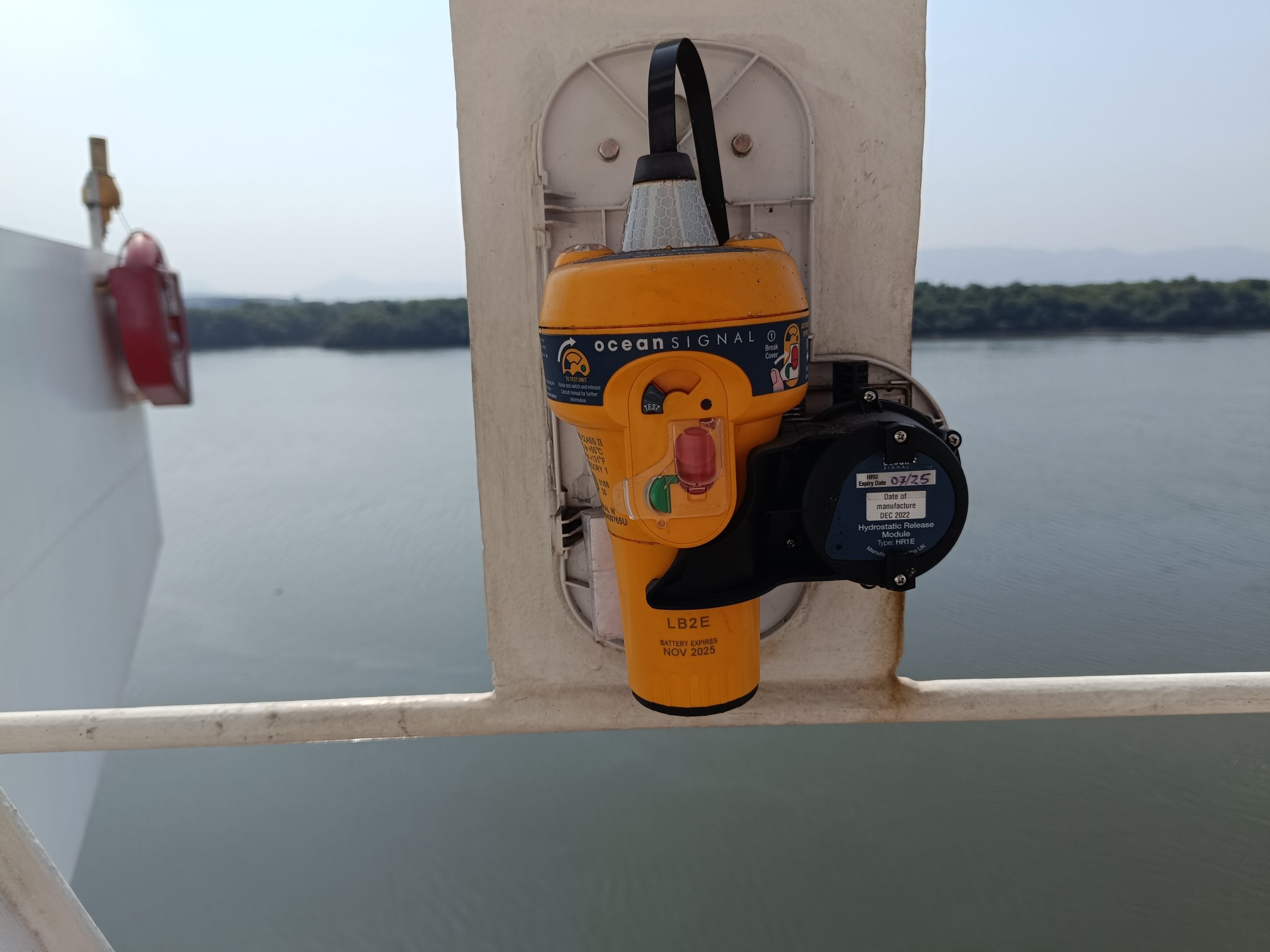
Introduction: What is an HRU EPIRB Combination?
An HRU (Hydrostatic Release Unit) is a critical component often paired with an EPIRB (Emergency Position Indicating Radio Beacon), a compact, battery-powered distress beacon that transmits a signal on a designated international frequency once activated. In time-sensitive emergencies like a sinking vessel, manually activating the EPIRB isn't always possible. That's exactly where the HRU comes in, automatically releasing and floating the EPIRB free without requiring any crew action.
How Does an HRU Deploy an EPIRB?
1. Automatic Activation
The HRU is attached to the EPIRB's container and uses water pressure as its triggering mechanism. When the unit submerges beyond a predetermined depth, typically between 1.5 to 4 meters, rising water pressure triggers the release mechanism.
2. EPIRB Release
Upon activation, the HRU severs the securing strap holding the EPIRB container in place, allowing the EPIRB to float freely to the water's surface.
3. Distress Signal Transmission
Once on the surface, the EPIRB automatically activates and transmits a distress signal on the 406 MHz frequency, which is received by search and rescue (SAR) satellites orbiting the Earth.
4. Faster Response Times
Because deployment happens automatically, the time between a vessel going down and the EPIRB transmitting a distress signal is significantly reduced, directly improving the odds of a fast search and rescue response.
HRU EPIRB Deployment Process at a Glance
| Stage | What Happens |
| Automatic Activation | Water pressure triggers the HRU at set depth (1.5-4m) |
| EPIRB Release | HRU severs the securing strap, freeing the EPIRB |
| Signal Transmission | EPIRB surfaces and transmits on 406 MHz to SAR satellites |
| Faster Response | Reduced time between incident and distress signal transmission |
Benefits of HRU EPIRB Combinations Over Manual Activation
- Eliminates Human Error: In emergencies involving panic or crew incapacitation, manual EPIRB activation might be delayed or impossible. The HRU removes this risk entirely by triggering automatically based on water pressure.
- Faster Distress Signaling: Automatic deployment allows for quicker EPIRB activation and signal transmission compared to relying on manual release alone.
- Increased Survivability: By expediting the distress signaling process, HRU EPIRB combinations can meaningfully improve survival odds for those in distress at sea.
HRU EPIRB vs. Standalone HRU Liferaft Deployment
The HRU mechanism itself works on the same water pressure activated principle whether it's deploying an EPIRB or a liferaft but the two serve different purposes. An HRU equipped liferaft provides physical shelter and survival supplies, while an HRU EPIRB ensures a distress signal reaches rescuers even if the raft or vessel can't be reached in time. For a deeper look at how HRUs work with liferafts specifically, including maintenance schedules, see our complete guide to HRU in liferafts.
Frequently Asked Questions (FAQs)
Q. What does HRU stand for in relation to an EPIRB?
A. HRU stands for Hydrostatic Release Unit, a water-pressure-activated mechanism attached to an EPIRB's container that automatically releases and floats the EPIRB free if a vessel sinks.\
Q. At what depth does an HRU release an EPIRB?
A. An HRU typically activates when submerged to a depth of approximately 1.5 to 4 meters, though the exact activation depth varies by manufacturer and model.
Q. Is an HRU required for all EPIRBs?
A. Requirements vary by vessel type and regulation, but many SOLAS regulated vessels are required to carry float-free EPIRBs equipped with an HRU to ensure automatic deployment in an emergency.
Q. How is an EPIRB different from an HRU liferaft?
A. Both use the same water pressure triggered release mechanism, but an HRU EPIRB automatically deploys a distress beacon to transmit a signal, while an HRU liferaft automatically deploys a survival platform, they often work together as part of the same emergency response.
Conclusion
An HRU EPIRB combination ensures that a distress signal reaches search and rescue satellites even when manual activation isn't possible, removing human error from one of the most critical moments in a maritime emergency. Equipping your vessel with a reliable HRU EPIRB is a direct investment in faster rescue response and improved survival odds. Visit Marinetech Safety Pvt. Ltd. to explore our full range of EPIRBs, HRUs and maritime safety equipment.
Service Email: info@marinetechss.com
Supply Email: supply@marinetechss.com
Phone: +91 8866475732 | +91 7227038216
Related Reading: The Ultimate Guide to HRU Liferaft Maintenance: Tips for Reliable Safety Equipment