Blog Post
The Ultimate Guide to HRU Liferaft Maintenance: Tips for Reliable Safety Equipment
Posted By: Harsh Bamnolia
Posted On : 19-Apr-2024
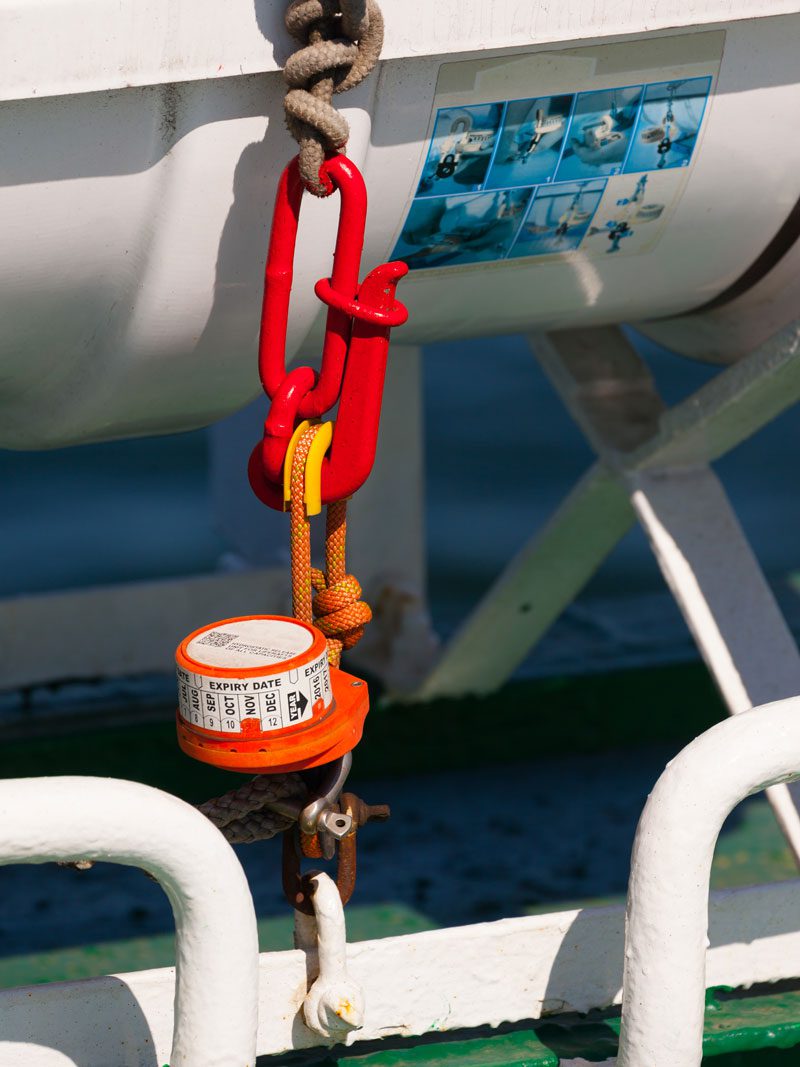
What Does HRU Stand for?
HRU stands for Hydrostatic Release Unit, a pressure-activated mechanism designed to automatically deploy a liferaft if a vessel sinks before crew can launch it manually. Constantly responsive to surrounding water pressure, the HRU is what ensures a liferaft still reaches the surface even in a worst-case scenario where a vessel goes down quickly.
How Does an HRU in a Liferaft Work?
When a vessel submerges beyond a predetermined depth, typically betwenn1.5 to 4 meters, the increasing water pressure activates the HRU. Here's how the process unfolds:
1. Pressure Activation
Rising water pressure pushes against a diaphragm within the HRU housing as the vessel submerges.
2. Release Mechanism
That pressure triggers a cutting blade or knife inside the unit.
3. Liferaft Deployment
The blade severs the holding strap or line securing the liferaft to the vessel, freeing it to float clear.
4. Inflation and Buoyancy
The liferaft's inflation system activates automatically, filling its chambers with compressed air or CO2.
5. Floating Lifeline
The now-buoyant liferaft rises to the surface, providing a safe haven for anyone who couldn't manually launch it before the vessel went down.
HRU Deployment at a Glance
| Stage | What Happens |
| Pressure Activation | Water pressure pushes against internal diaphragm at set depth |
| Release Mechanism | Pressure triggers a cutting blade or knife |
| Liferaft Deployment | Blade cuts the holding strap, freeing the raft |
| Inflation and Buoyancy | Raft's inflation system fills chamber with air/CO2 |
| Floating Lifeline | Raft rises to the surface, ready for survivors |
Why the HRU in a Liferaft Matters?
- Rapid, Automatic Deployment: In an emergency, every second counts. The HRU's automatic activation significantly reduces the time needed to launch the liferaft compared to manual deployment alone.
- Eliminates Human Error: Because deployment doesn't depend on manual action, the HRU ensures the liferaft launches regardless of panic, chaos or crew incapacitation during a crisis.
- Improved Crew Safety: With an HRU in place, crew can focus on evacuation and assisting others, trusting that the liferaft will deploy and be accessible even if manual launch isn't possible.
- Regulatory Compliance: International regulations, including SOLAS, mandate HRUs on certain vessels, ensuring a standardized baseline of safety across maritime operations.
Choosing the Right HRU for Your Liferaft
Selecting the right HRU depends on several factors:
- Vessel Size: Larger vessels may have different mounting and depth activation requirements
- Liferaft Type: HRU compatibility varies depending on the liferaft model and stowage method
- Operational Environment: Water conditions and typical operating depth can influence the ideal HRU specification
HRU Maintenance Schedule
Regular maintenance is what ensures an HRU performs correctly when it matters most. Follow this schedule to keep your HRU liferaft ready for deployment:
Monthly: Visual Inspection
Conduct a thorough visual inspection of the HRU at least once a month. Check for signs of damage, corrosion or leaks on the HRU housing and the securing strap connecting it to the liferaft.
Every 3 Months: Activation Mechanism Check
Manually activate the HRU mechanism using the designated lever or trigger, and observe whether the firing pin releases and severs the securing strap cleanly. Reset the mechanism carefully per manufacturer instructions.
Important safety note: Never perform a live fire test with the liferaft inflated.
Annually: Professional Service
Schedule a professional service with a qualified technician once a year. This service typically includes a comprehensive inspection, cleaning and lubrication of the mechanism, and replacement of any worn components.
HRU Maintenance Schedule Summary
| Frequency | Task | Key Focus |
| Monthly | Visual inspection | Damage, corrosion or leaks on housing and securing strap |
| Every 3 Months | Activation mechanism check | Firing pin release and clean strap severance (raft deflated only) |
| Annually | Professional service | Full inspection, cleaning, lubrication, worn-part replacement |
Frequently Asked Questions (FAQs)
Q. What does HRU mean in relation to a liferaft?
A. HRU stands for Hydrostatic Release Unit, a pressure-activated device that automatically deploys a liferaft when a vessel submerges beyond a set depth, ensuring the raft launches even if it can't be released manually.
Q. At what depth does an HRU activate?
A. An HRU typically activates when the vessel submerges to a depth of approximately 1.5 to 4 meters, though the exact activation depth depends on the specific unit and manufacturer specifications.
Q. Why is an HRU important if crew can launch a liferaft manually?
A. An HRU provides a critical backup in situations where a vessel sinks too quickly for manual launch, or when crew are unable to release the liferaft themselves, ensuring the raft still deploys and floats free.
Q. Is it safe to test-fire an HRU with the liferaft inflated?
A. No. A live activation test should only ever be performed with the liferaft deflated, testing with an inflated raft risks unintended deployment and equipment damage.
Conclusion
The HRU in a liferaft is a small device with an outsized responsibility, automatically deploying a liferaft the moment a vessel submerges, without depending on manual crew action. Understanding how it works, and choosing the right unit for your vessel, is a critical part of ensuring liferaft readiness in a worst-case scenario. Visit Marinetech Safety Pvt. Ltd. to explore our liferaft servicing, HRUs and essential lifesaving equipment.
Service Email: info@marinetechss.com
Supply Email: supply@marinetechss.com
Phone: +91 8866475732 | +91 7227038216
Related Reading: Understanding the Role of HRU in EPIRB Deployments: A Comprehensive Guide | What is an HRU in Liferaft? How it Works and Why it Matters