Blog Post
Fire Fighting Appliances Service in India 2026: Complete Guide
Posted By: Harsh Bamnolia
Posted On : 18-Mar-2026
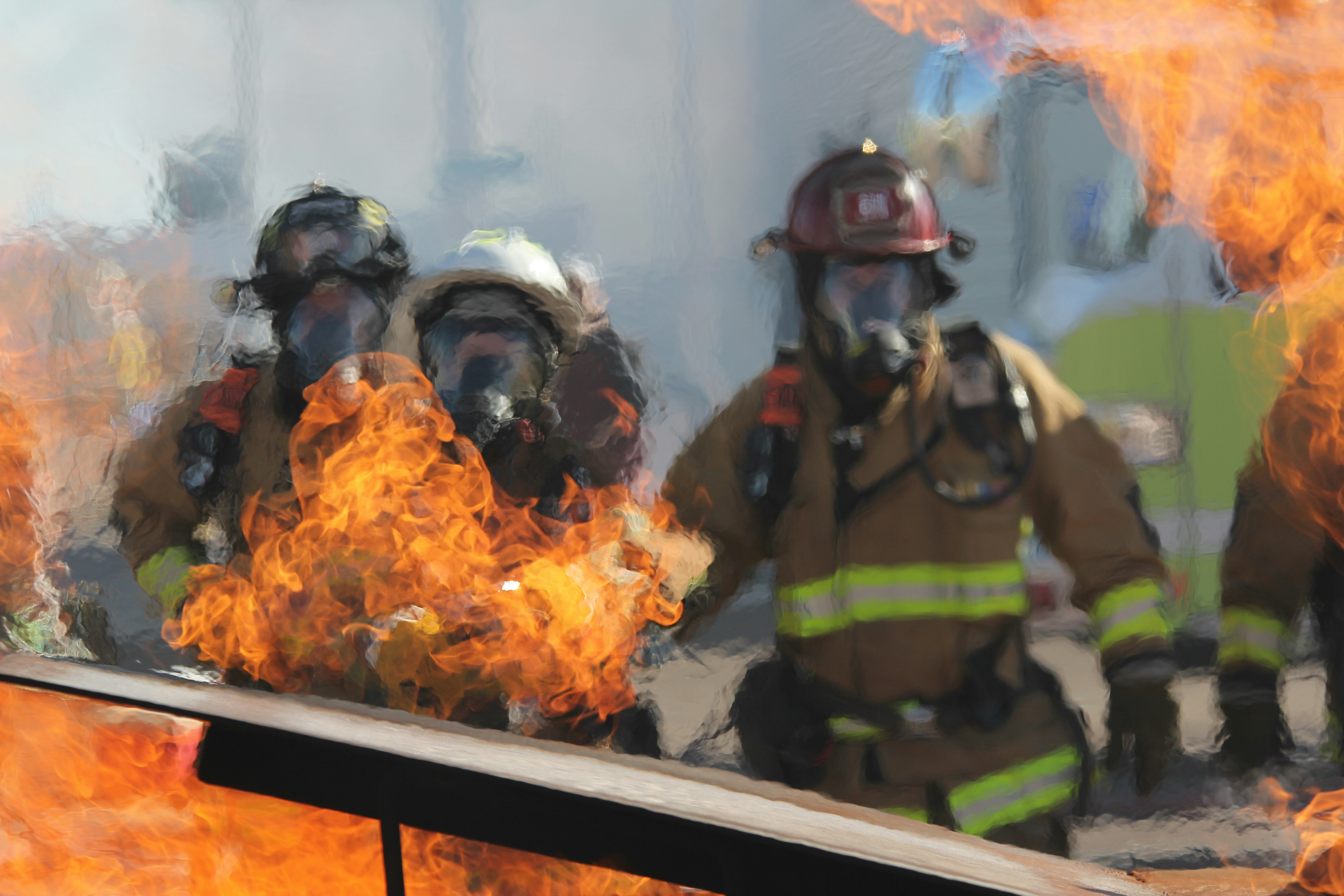
Fire Fighting Appliances Inspection & Service in India 2026: The Complete Guide
Fire is the most feared emergency at sea — and for good reason. A fire on board a vessel in open water, far from shore-based assistance, depends entirely on the crew's training and the condition of the fire fighting equipment they have on hand. If that equipment has not been properly inspected, serviced, and maintained, it will not perform when it matters most.
Fire safety deficiencies are consistently the number one PSC detention category globally. In 2026, with PSC officers across the Indian Ocean MOU and Tokyo MOU actively scrutinising fire fighting appliances on every vessel calling at Indian ports, non-compliance is not just a safety risk — it is a commercial one. A single detention at Mumbai, Kandla, or Chennai for fire safety deficiencies can cost a shipowner more in one day than a comprehensive fire fighting appliances service costs in an entire year.
This guide covers everything ship managers and superintendents need to know about fire fighting appliances inspection and service in India — what SOLAS requires, what a compliant service involves, the most common deficiency findings, and how Marinetech delivers certified FFA service across all major Indian ports.
What Are Fire Fighting Appliances Under SOLAS?
SOLAS Chapter II-2 governs fire protection, fire detection, and fire extinction on commercial vessels. Fire fighting appliances — commonly referred to as FFA in the maritime industry — are a specific subset of the broader fire safety framework. They include the portable and semi-portable fire extinguishers distributed across the vessel, the fireman's outfits carried on board, self-contained breathing apparatus (SCBA) sets, fire hoses and nozzles, and the fixed fire suppression systems installed in the engine room, cargo holds, and accommodation spaces.
Together with life-saving appliances (LSA), FFA forms the category that PSC officers consistently spend the most inspection time on. The Safety Equipment Certificate and its attached Record of Equipment lists every FFA item the vessel must carry — and every item on that list is subject to inspection and verification during a PSC visit.
SOLAS Fire Fighting Appliances Requirements by System
Understanding the specific SOLAS requirements for each FFA system helps ship managers direct their pre-arrival preparation more effectively.
Portable and Semi-Portable Fire Extinguishers
SOLAS Regulation II-2/10 requires a specific number and type of portable fire extinguishers distributed throughout the vessel based on the vessel's type, size, and trading area. Every extinguisher must be inspected annually by a qualified technician. The inspection must verify the weight of CO2 extinguishers and the pressure of stored-pressure extinguishers, the condition of the cylinder, hose, nozzle, and operating mechanism, and the security and accessibility of the mounting bracket. Every extinguisher must carry a valid inspection tag showing the date of the last service and the name of the servicing company.
Fireman's Outfits
SOLAS requires a minimum of two fireman's outfits on cargo ships — more on passenger ships and vessels with special category spaces. Each outfit must be complete and comprise a protective suit, boots and gloves, a helmet, an electric safety lamp rated for at least 3 hours, a fire axe, and a complete SCBA set. The entire outfit must be stored together in a clearly marked, readily accessible location. During an FFA inspection, every component of every fireman's outfit is physically checked for completeness and condition.
Self-Contained Breathing Apparatus (SCBA)
Each SCBA set must have a cylinder with sufficient air for at least 30 minutes of use. Cylinder pressure is physically checked during every inspection — any cylinder below the minimum rated pressure is deficient. SCBA sets must be within their annual inspection interval and the inspection record must be available on board. Spare cylinder charges must be carried in sufficient quantity as required by SOLAS for the vessel type.
Fixed Fire Suppression Systems
The engine room fixed fire suppression system — whether CO2 total flood, high-expansion foam, water mist, or dry powder — must have a current annual inspection certificate issued by an authorised service provider. For CO2 systems specifically, every cylinder must be weighed at the annual inspection and the total available CO2 quantity verified against the calculated requirement for the protected space. Any cylinder found underweight must be recharged or replaced before the vessel sails. The release mechanism, piping, nozzles, and alarm systems are all inspected as part of the annual service.
Fire Hoses, Nozzles, and Hydrants
Every fire hose on board must be in good physical condition — free from cracks, cuts, or deterioration — and must be fitted with a compatible nozzle. Fire hydrant valves must be fully operational with no seized spindles. The international shore connection must be accessible and in correct condition. Fire hoses are pressure-tested periodically, and evidence of pressure testing should be available if requested by a PSC officer.
Fire Detection and Alarm Systems
The ship's fixed fire detection and alarm system must be operational with no isolated zones that cannot be justified by documented maintenance activity. Every detector in every zone must be functional. The fire alarm must be audible throughout the vessel. The control panel must show no active faults. PSC officers check the fire detection panel carefully — an isolation that appears to have been applied to suppress a nuisance alarm rather than for legitimate maintenance purposes is a serious ISM finding.
What a Compliant FFA Inspection Involves
A full fire fighting appliances inspection by Marinetech's certified engineers covers every system described above. Here is how the process works on board your vessel.
Document Review: The engineer begins by reviewing the vessel's Safety Equipment Certificate and its Record of Equipment to establish exactly what FFA items the vessel is required to carry. Previous FFA inspection records are reviewed to identify any outstanding items from previous services.
Portable Extinguisher Service: Every portable and semi-portable extinguisher on board is physically inspected. CO2 extinguishers are weighed — any extinguisher that has lost more than 10% of its rated charge is recharged or replaced. Stored-pressure extinguishers are pressure-checked. Every extinguisher receives a new inspection tag with the current date.
Fireman's Outfit Inspection: Every fireman's outfit is inspected for completeness. The protective suit, boots, gloves, helmet, axe, lamp, and SCBA set are individually checked. SCBA cylinder pressure is measured on every set. Any set with a cylinder below the minimum pressure is flagged for cylinder exchange.
Fixed System Inspection: The engine room fixed fire suppression system is inspected. For CO2 systems, every cylinder is weighed and the total available charge is calculated. The release mechanism, pilot lines, and nozzles are inspected. The alarm and detection system serving the protected space is tested. The inspection certificate is issued confirming the system is in a ready state.
Fire Hose and Hydrant Check: All fire hoses are physically inspected. Hydrant valves are tested for operation. The international shore connection is inspected. Any hose found to be deteriorated is flagged for replacement.
Fire Detection System Check: The fire detection panel is reviewed for active isolations or faults. Where access is available, individual detectors are tested. Any unexplained isolations are discussed with the chief officer and noted in the inspection report.
Documentation: A complete FFA inspection report is issued listing every item inspected, its condition, and any deficiencies found. A statement of fitness is provided for all systems that pass inspection. Any deficiencies are clearly documented with recommended corrective action. All documentation is produced in a format acceptable to class society surveyors and PSC officers.
Most Common FFA Deficiencies Found During PSC Inspections in India
Knowing where vessels typically fail helps you target your pre-arrival checks precisely.
The most commonly cited fire fighting appliance deficiency at Indian ports is portable fire extinguishers that are beyond their annual inspection date. This is almost always a result of not tracking inspection dates individually — vessels tend to service a batch of extinguishers and then lose track of when individual units are due. The second most common is CO2 fixed system cylinders found underweight at annual inspection, either because the system was discharged partially and not fully recharged, or because slow seepage over time has reduced the charge below tolerance. The third is incomplete fireman's outfits — typically missing a glove, a lamp with a discharged battery, or an SCBA cylinder below minimum pressure.
Less common but immediately detainable findings include a fixed fire suppression system with an expired annual inspection certificate, an inoperable fire detection panel with multiple isolated zones and no maintenance documentation, and SCBA sets with cylinders that have not been hydrostatically tested within the required interval. Read our full breakdown of the most common PSC deficiencies that lead to ship detention.
The Relationship Between LSA and FFA Inspections
Fire fighting appliances inspection is closely related to life-saving appliances inspection — both fall under the Safety Equipment Certificate and both are inspected together during PSC visits. Many ship managers schedule their LSA and FFA inspections simultaneously to avoid the disruption and cost of two separate service visits.
Marinetech provides both LSA and FFA inspection services under a single service call, allowing vessels to address lifeboat inspection, liferaft servicing, and fire fighting appliances inspection in a single port stop. This approach is particularly efficient at high-turnaround ports like Mumbai, JNPT, Kandla, and Mundra where vessel time in port is limited. Contact us to discuss a combined LSA and FFA service for your next Indian port call.
Ports Where Marinetech Provides FFA Service in India
Marinetech Safety Pvt. Ltd. provides certified fire fighting appliances inspection and service across all major Indian ports.
On the west coast, our teams cover Mumbai and JNPT for the container and general cargo sector, Kandla and Mundra for the bulk cargo sector, Hazira and Dahej for petrochemical and LNG vessels, Cochin for the Kerala coast trade, and Goa for vessels calling at Mormugao. On the east coast, we cover Chennai and Ennore for South India trade, Visakhapatnam (Vizag) for the eastern bulk sector, Kolkata and Haldia for Bay of Bengal operations, and Paradip for the growing Odisha trade. For vessels calling at ports not listed here, contact us with advance notice and we will arrange coverage.
Why Marinetech for Fire Fighting Appliances Service in India
Marinetech Safety Pvt. Ltd. is DG Shipping approved and recognised by all major classification societies — ABS, DNV GL, Bureau Veritas, Lloyd's Register, IRS, NKK, RINA, CCS, and Korean Register — for fire fighting appliances inspection and service. Our engineers are trained on all major fixed suppression system types and carry the calibrated weighing equipment required for CO2 cylinder inspection on every service call.
We supply SOLAS-compliant replacement extinguishers, CO2 cylinder recharging, SCBA cylinder exchanges, and fireman's outfit components directly from our stock — meaning deficiencies found during the inspection can typically be rectified in the same service visit rather than requiring a return call. View our full range of fire fighting equipment and appliances supplies.
Every FFA inspection we conduct produces documentation that PSC officers accept without challenge — because it comes from a provider that is genuinely approved, trained, and equipped for the work. View our class society approvals and DG Shipping certifications.
Frequently Asked Questions
How often must fire fighting appliances be inspected under SOLAS?
Portable fire extinguishers must be inspected annually. Fixed fire suppression systems — CO2, foam, water mist, and dry powder — must have an annual inspection certificate. SCBA sets must be within their annual service interval. Fireman's outfits are checked at every periodic survey. Fire detection systems are tested as part of the vessel's regular safety management system maintenance programme.
Can the ship's crew conduct the FFA annual inspection?
Crew can conduct the visual checks and operational tests required under the planned maintenance system. However the annual inspection of fixed fire suppression systems — particularly CO2 systems where cylinder weighing is required — must be conducted by a trained, authorised service engineer. SCBA cylinder pressure checks can be conducted by crew but the formal annual inspection should be by a certified technician.
What happens if the CO2 system cylinders are found underweight?
Underweight cylinders must be recharged or replaced before the vessel sails. The quantity of available CO2 must meet the calculated requirement for the protected space. A vessel with an underweight CO2 system is non-compliant and cannot receive a valid inspection certificate until the deficiency is rectified. Marinetech carries replacement cylinders and recharging equipment to handle this on the same service visit where possible.
Does the fixed fire suppression system inspection cover the engine room only?
No. The inspection covers all spaces protected by fixed fire suppression systems on board — typically the engine room, cargo pump room on tankers, paint locker, and any special category cargo spaces. Every protected space must have its own inspection record confirming that the system serving it is in a ready state.
How long does a full FFA inspection take on a typical cargo vessel?
A complete FFA inspection on a standard bulk carrier or container vessel with a CO2 engine room system, two fireman's outfits, and the standard complement of portable extinguishers typically takes 4 to 6 hours. Vessels with larger or more complex fire safety arrangements — tankers with multiple protected spaces, passenger ships with extensive fixed systems — will take longer. Marinetech provides time estimates before every service so port scheduling is not disrupted.
Does Marinetech supply replacement FFA items found deficient during inspection?
Yes. Marinetech carries a range of SOLAS-compliant replacement extinguishers, CO2 cylinders, SCBA cylinder exchanges, and fireman's outfit components in stock for immediate supply during service visits. Items that are not immediately available from mobile stock can typically be sourced within 24 to 48 hours at most major Indian ports.
Book Fire Fighting Appliances Service Across India
Contact Marinetech Safety Pvt. Ltd. to schedule your fire fighting appliances inspection at any major Indian port. Advise the number and types of fixed systems on board and we will confirm availability, estimated service duration, and any parts requirements within 24 hours.
Services email: info@marinetechss.com
Phone: +91-8866475732 | +91-72270 38216
Get a Free Quote for Fire Fighting Appliances Service
Related reading: Certified Lifeboat Servicing in India 2026 | Liferaft Servicing in India 2026 | Top 10 PSC Deficiencies That Lead to Ship Detention | How to Prepare for a PSC Inspection: Checklist 2026