Blog Post
Types of Smoke Detectors on Ships: Complete Guide
Posted By: Harsh Bamnolia
Posted On : 20-Jul-2024
Why Smoke Detector Type Matters
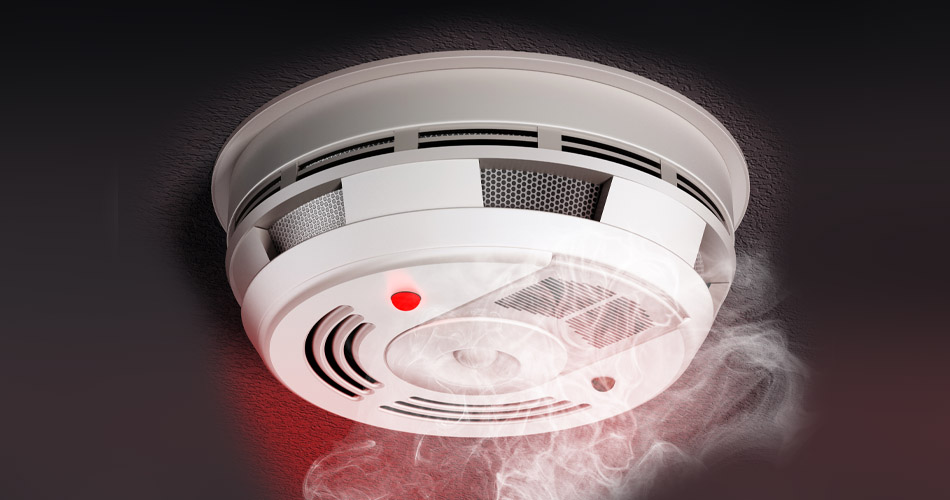
Smoke detectors are a crucial component of a ship's fire safety system, designed to catch smoke at the earliest possible stage and give crew time to respond before a fire spreads. But different areas of a vessel, engine rooms, accommodation spaces, kitchens, cargo holds, face different fire risks, which is why choosing the right type of smoke detector for each space matters just as much as having detectors at all.
5 Key Types of Smoke Detectors on Ship
1. Ionization Smoke Detectors
Ionization detectors use a small amount of radioactive material to ionize the air inside the detection chamber. When smoke particles enter and disrupt that ionization process, the alarm triggers.
How it works: Highly sensitive to small smoke particles typically produced by fast-flaming fires.
Best used in: Engine rooms and machinery spaces, where fast detection of quick-igniting fires, such as those involving flammable liquids, is critical.
2. Photoelectric Smoke Detectors
Also known as optical smoke detectors, these use a light source and sensor. When smoke particles scatter the light beam, the sensor detects the change and triggers the alarm.
How it works: More responsive to larger smoke particles typical of smoldering fires, such as those involving wood, upholstery or electrical wiring.
Best used in: Living quarters, accommodation spaces and storage areas, where a low false-alarm matters for crew comfort and compliance.
3. Heat-Sensitive Smoke Detectors
Also called thermal detectors, these respond to a rapid rise in temperature, with many models also incorporating smoke detection.
How it works: Triggers when temperature in the monitored area exceeds a set threshold, reducing false alarms in naturally hot or dusty environments.
Best used in: Kitchens, boiler rooms, and other high-temperature areas where standard smoke detectors risk frequent false alarms.
4. Combination Smoke Detectors
Multi-sensor devices that combine ionization and photoelectric direction technologies in a single unit.
How it works: Responds to a wider range of fire types by covering both fast-flaming and smoldering fire signatures simultaneously.
Best used in: Critical spaces like control rooms, engine rooms and storage areas, where comprehensive detection coverage is a priority.
5. Aspiration Smoke Detectors
These continuously draw air through a network of pipes into a central detection unit, where it's analyzed for smoke particles.
How it works: Extremely high sensitivity, capable of detecting even the smallest traces of smoke well before it would trigger a conventional detector.
Best used in: Data centers, control rooms, cargo holds and other spaces with valuable or sensitive equipment or where traditional point detectors aren't practical.
Smoke Detector Types at a Glance
| Type | Detected Method | Best For |
| Ionization | Disrupted ionization from small smoke particles | Fast-flaming fires (engine rooms, machinery spaces) |
| Photoelectric | Light scatter from larger smoke particles | Smoldering fires (accommodation, storage areas) |
| Heat-sensitive | Rapid temperature rise threshold | High-temperature/dusty areas (kitchens, boiler rooms) |
| Combination | Ionization + photoelectric | Critical spaces needing broad coverage |
| Aspiration | Continuous air sampling via pipe network | Ultra-early detection (data/control rooms, cargo holds) |
Choosing the Right Smoke Detector for Each Space
Selecting the correct detector type for each area of the vessel is what makes a fire detection system effective rather than just present. A single detector type rarely covers every risk onboard, more vessels rely on a mix, matching detector technology to the specific fire risks of engine rooms, living quarters, galleys and critical equipment spaces.
Marinetech Safety Pvt. Ltd. offers a comprehensive range of high-quality smoke detectors built to meet the maritime industry's strictest safety standards, including ionization, photoelectric, heat-sensitive, combination and aspiration detectors engineered for reliable performance and durability in marine conditions.
Frequently Asked Questions (FAQs)
Q. What types of smoke detectors are used on ships?
A. The main types are ionization, photoelectric, heat-sensitive, combination and aspiration smoke detectors, each suited to different fire risks and vessel locations.
Q. What is the difference between ionization and photoelectric smoke detectors?
A. Ionization detectors respond quickly to small smoke particles from fast-flaming fires, while photoelectric detectors are more responsive to larger smoke particles from slow-burning, smoldering fires.
Q. Where should heat-sensitive smoke detectors be installed on a ship?
A. Heat-sensitive detectors are best suited to kitchens, boiler rooms and other high temperature or dusty areas where standard smoke detectors are prone to false alarms.
Q. Why do ships use combination smoke detectors in critical spaces?
A. Combination detectors merge ionization and photoelectric technology, providing broader detection coverage across both fast-flaming and smoldering fire types, valuable in critical areas where any fire type could occur.
Q. Which ports does Marinetech provide smoke detectors at?
A. Marinetech Safety Pvt. Ltd. provides smoke detectors at major ports across India, including Mumbai, Nhava Sheva (JNPT), Kandla, Mundra, Pipavav, Hazira, Dahej, Goa, Mangalore, Kochi, Chennai, Ennore, Visakhapatnam, Paradip, Haldia, Kolkata, Tuticorin, Dhamra, Kakinada, Vadinar and Sikka.
Conclusion
Choosing the right type of smoke detector for each space on a vessel is central to an effective fire detection strategy. From fast-responding ionization detectors in engine rooms to ultra-sensitive aspiration systems in critical spaces, matching detector technology to actual fire risk gives crews the earliest possible warning when it matters most. Visit Marinetech Safety Pvt. Ltd. to explore our full range of smoke detectors and fire safety equipment.
Supply Email: supply@marinetechss.com
Phone: +91 8866475732 | +91 7227038216
Related Reading: Understanding the 6 Key Benefits of Fixed Fire Fighting Systems on Ships