Blog Post
What Life Saving Equipment on Ship Is Non-Negotiable for Safety?
Posted By: Harsh Bamnolia
Posted On : 19-Dec-2025
What Life Saving Equipment on Ship Is Non-Negotiable for Safety?
Life saving equipment on ship plays a critical role in protecting human life during maritime emergencies, making it one of the most regulated and essential aspects of ship safety.
From fire outbreaks to abandon-ship scenarios, life saving equipment on ship ensures that crew and passengers have the tools needed to survive until rescue arrives.
Understanding what equipment is mandatory, how it functions, and how it must be maintained is essential for compliance with SOLAS and IMO regulations.
Why Life Saving Equipment on Ship Is Non-Negotiable Under Maritime Law
Life saving equipment on ship is mandated under the International Convention for the Safety of Life at Sea (SOLAS), which sets global safety standards for vessels.
These regulations exist because maritime environments are inherently unpredictable, and emergencies can escalate rapidly.
The purpose of life saving equipment on ship is to:
Protect human life during emergencies
Enable safe evacuation and survival
Ensure compliance with international maritime laws
Reduce fatalities during accidents at sea
Failure to maintain or deploy proper life saving equipment on ship can result in severe penalties, vessel detention, and loss of life.
Essential Categories of Life Saving Equipment on Ship
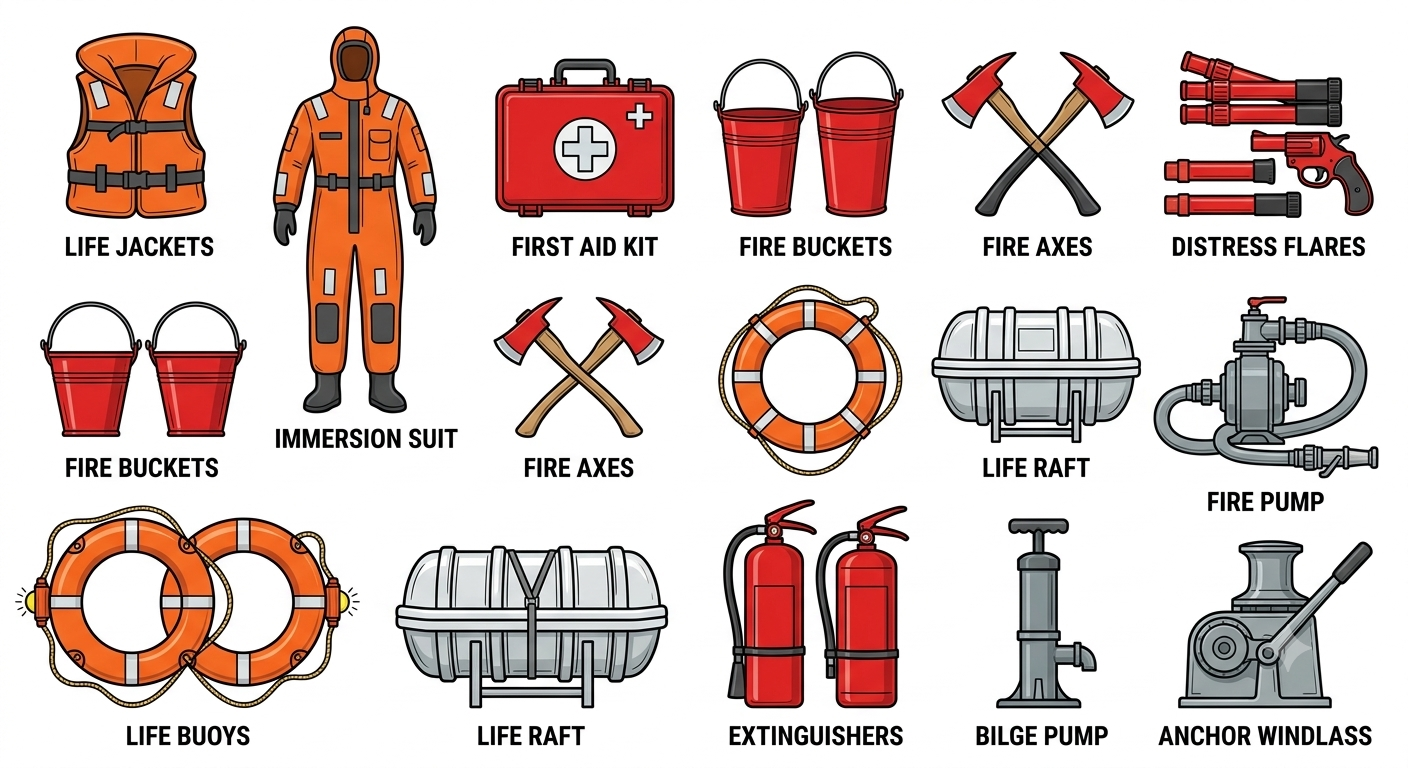
Life saving equipment on ship includes a wide range of devices designed to address different emergency scenarios. Each category serves a specific purpose and is required in defined quantities depending on vessel type and operational area.
Liferafts are inflatable survival crafts used when abandoning ship. They are designed to keep occupants afloat and protected until rescue.
Lifejackets provide individual buoyancy and must be available for every person on board, including spares.
Immersion suits protect the wearer from hypothermia in cold-water conditions and are essential for vessels operating in colder climates.
Lifebuoys are throwable flotation devices used for immediate man-overboard rescue.
Emergency Position Indicating Radio Beacons (EPIRBs) transmit distress signals to rescue authorities, enabling quick localization.
All these components together form the backbone of life saving equipment on ship.
Life Saving Equipment on Ship and SOLAS Compliance Requirements
SOLAS regulations specify exact requirements for life saving equipment on ship, including quantity, placement, accessibility, and performance standards. Each vessel must be equipped based on its type, tonnage, and route.
For example:
Passenger ships require life saving equipment for every person onboard plus additional reserves.
Cargo vessels must carry sufficient liferaft capacity on each side.
Offshore vessels have enhanced requirements due to operational risk.
Compliance with life saving equipment on ship regulations is verified through flag state and port state inspections.
Importance of Immersion Suits in Life Saving Equipment on Ship
Immersion suits are a critical component of life saving equipment on ship, especially for vessels operating in cold or temperate waters. These suits reduce heat loss and protect against hypothermia during abandonment.
Immersion suits are designed to:
Maintain core body temperature
Provide buoyancy
Protect against wind and water exposure
Allow mobility during evacuation
They must be easily accessible and compatible with lifejackets and liferafts. Certified immersion suits and associated equipment can be explored at https://marinetechss.com/supplies/life-saving-equipmentonShip
This ensures full compliance with SOLAS and industry standards.
Inspection and Maintenance of Life Saving Equipment on Ship
Routine inspection is essential to ensure life saving equipment on ship remains functional and compliant. Equipment must be checked regularly for damage, expiry, and proper stowage.
Inspection routines include:
Checking lifejackets for tears and buoyancy
Inspecting liferafts for service validity
Ensuring hydrostatic release units are operational
Testing EPIRBs and emergency lights
Verifying immersion suit condition
Neglecting maintenance can render life saving equipment on ship ineffective during emergencies.
Training and Familiarization for Life Saving Equipment on Ship
Training is essential for ensuring that life saving equipment on ship can be used effectively during emergencies. Crew members must be familiar with equipment locations, deployment methods, and safety procedures.
Training programs should include:
Lifeboat and liferaft drills
Immersion suit donning exercises
Emergency evacuation simulations
Man-overboard response training
Regular drills improve response time and confidence during real-life emergencies.
Common Compliance Gaps in Life Saving Equipment on Ship
Despite clear regulations, common issues still arise with life saving equipment on ship, such as:
Expired or missing safety gear
Improper storage blocking access
Insufficient crew training
Outdated certification records
Addressing these gaps proactively prevents inspection failures and improves onboard safety culture.
Why Life Saving Equipment on Ship Is a Legal and Moral Responsibility
Life saving equipment on ship is not just a regulatory requirement—it is a moral obligation. Every seafarer has the right to a safe working environment and access to functional emergency equipment.
Non-compliance can lead to serious consequences including loss of life, environmental damage, and reputational harm.
Ensuring proper life saving equipment on ship demonstrates a commitment to safety, professionalism, and global maritime standards.
Best Practices for Managing Life Saving Equipment on Ship
To maintain full compliance and readiness:
Conduct regular audits and drills
Maintain updated service records
Partner with certified service providers
Replace outdated or damaged equipment promptly
Train crew consistently
These best practices ensure life saving equipment on ship is always ready for emergencies.
Conclusion and Call to Action
Ensuring life saving equipment on ship is fully compliant is a fundamental responsibility that directly impacts crew safety and operational success.
From immersion suits and liferafts to EPIRBs and lifebuoys, every piece of equipment plays a vital role in emergency preparedness.
For certified life saving equipment, professional servicing, and SOLAS-compliant solutions, visit https://marinetechss.com/supplies/life-saving-equipmentonShip
Stay compliant, stay prepared, and safeguard lives at sea with reliable life saving equipment on ship.