Blog Post
What Is the Liferaft Service Interval as per IMO and SOLAS?
Posted By: Harsh Bamnolia
Posted On : 19-Dec-2025
What Is the Liferaft Service Interval as per IMO and SOLAS?
Liferaft service interval is a critical safety parameter defined under international maritime regulations to ensure that liferafts remain fully functional and ready for emergency use.
Understanding the liferaft service interval is essential for shipowners, operators, safety officers, and maritime professionals responsible for vessel compliance and crew safety.
This detailed guide explains liferaft service interval requirements under IMO and SOLAS, why they matter, how servicing is conducted, and how compliance directly impacts survival at sea.
Understanding Liferaft Service Interval Under IMO and SOLAS Regulations
The liferaft service interval is governed by the International Maritime Organization (IMO) through the SOLAS Convention (Safety of Life at Sea).
SOLAS mandates that all liferafts carried on board ships must undergo regular inspection and servicing at approved service stations to ensure they function correctly during emergencies.
As per SOLAS Chapter III and the LSA Code, the standard liferaft service interval is every 12 months, unless extended approval is granted by the flag administration. This ensures that all components of the liferaft remain operational and compliant with international safety standards.
The liferaft service interval applies to all commercial vessels, including cargo ships, passenger ships, offshore vessels, and special-purpose ships operating in international waters.
Why Liferaft Service Interval Is Critical for Maritime Safety
The liferaft service interval is not just a regulatory requirement—it is a life-saving necessity. Liferafts are stored for long durations in harsh marine environments, exposed to saltwater, humidity, temperature changes, and vibration. Without periodic inspection, components may degrade unnoticed.
Adhering to the liferaft service interval ensures:
Proper inflation of buoyancy chambers
Integrity of fabric and seams
Functionality of inflation systems
Availability of survival equipment
Compliance with SOLAS and port state control
A missed or delayed liferaft service interval can result in equipment failure during abandonment, putting lives at serious risk.
What Happens During a Liferaft Service Interval Inspection
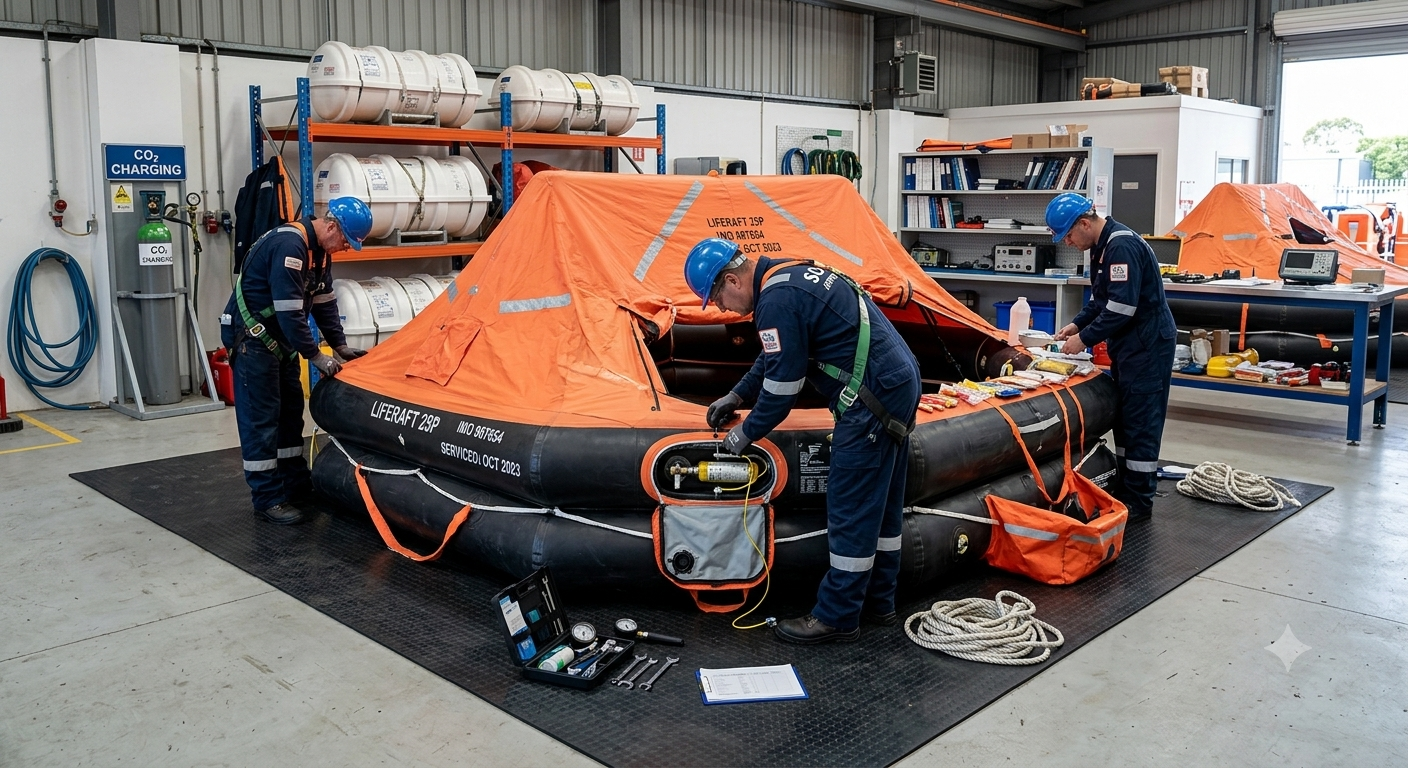
During a scheduled liferaft service interval, certified technicians carry out detailed inspections and tests to ensure full functionality. These inspections are performed only at authorized service stations approved by the manufacturer and flag state.
A typical liferaft service interval inspection includes:
Opening and inflation of the liferaft
Pressure testing of buoyancy chambers
Inspection of fabric, seams, and valves
Verification of inflation gas cylinders
Replacement of expired items in the survival pack
Checking lights, reflective tapes, and canopy
Repacking and resealing the liferaft
Each step ensures the liferaft will perform as intended during an emergency.
SOLAS and IMO Guidelines for Liferaft Service Interval Extensions
In certain cases, SOLAS allows limited extensions to the liferaft service interval. Typically, a short extension of up to 5 months may be granted by the flag administration under specific operational conditions.
However, these extensions are strictly controlled and must be documented. Vessels operating beyond the approved liferaft service interval without authorization may face detention, penalties, or loss of certification.
Therefore, maintaining accurate service records and adhering to the liferaft service interval is essential for compliance and operational continuity.
Relationship Between Liferaft Service Interval and Immersion Suits
The liferaft service interval is closely linked with the condition of other lifesaving appliances, particularly immersion suits.
Immersion suits are often stored near liferafts and are critical for survival in cold-water abandon-ship scenarios.
During liferaft servicing, associated safety equipment such as immersion suits is often inspected or verified to ensure readiness.
Immersion suits protect crew members from hypothermia and extend survival time, complementing the protection provided by liferafts.
Certified immersion suits and liferaft servicing solutions can be explored at https://marinetechss.com/services/liferaft-servicing
Ensuring both liferafts and immersion suits are compliant strengthens overall emergency preparedness.
Common Issues Found During Liferaft Service Interval Checks
Routine liferaft service interval inspections often reveal common deficiencies that can compromise safety if left unaddressed. These include:
Expired flares and food rations
Corroded inflation cylinders
Damaged fabric or seams
Malfunctioning release mechanisms
Incorrect stowage or securing
Regular servicing ensures these issues are corrected before they pose a risk.
Crew Responsibilities Related to Liferaft Service Interval
Crew members play a vital role in maintaining compliance with the liferaft service interval. While technical servicing is done ashore, onboard crew must:
Monitor service due dates
Conduct visual checks during safety rounds
Report any damage or irregularities
Ensure accessibility of liferafts
Proper crew awareness prevents oversight and enhances safety readiness.
Training and Documentation for Liferaft Service Interval Compliance
Training is essential to ensure crews understand the importance of the liferaft service interval. Regular drills should include familiarization with liferaft locations, launching procedures, and survival equipment usage.
Documentation such as service certificates, inspection reports, and maintenance logs must be readily available for inspection by authorities. Accurate records demonstrate compliance with SOLAS and IMO requirements.
Why Liferaft Service Interval Compliance Matters Globally
The liferaft service interval is not just a procedural requirement—it is a global safety standard developed from decades of maritime incident analysis. Proper adherence reduces fatalities, enhances rescue efficiency, and supports international maritime safety goals.
Non-compliance can result in vessel detention, insurance issues, reputational damage, and most importantly, loss of life.
Conclusion
Understanding liferaft service interval requirements is essential for ensuring safety, compliance, and preparedness at sea. From regular inspections and certified servicing to proper documentation and crew training, every element contributes to effective emergency response.
For professional liferaft servicing, immersion suit inspection, and SOLAS-compliant safety solutions, visit https://marinetechss.com/services/liferaft-servicing
Ensure your vessel remains compliant, operational, and ready to protect lives at sea.