Blog Post
Life Raft Servicing Procedures: Essential inspection and Maintenance Checklist
Posted By: Harsh Bamnolia
Posted On : 10-Jul-2023
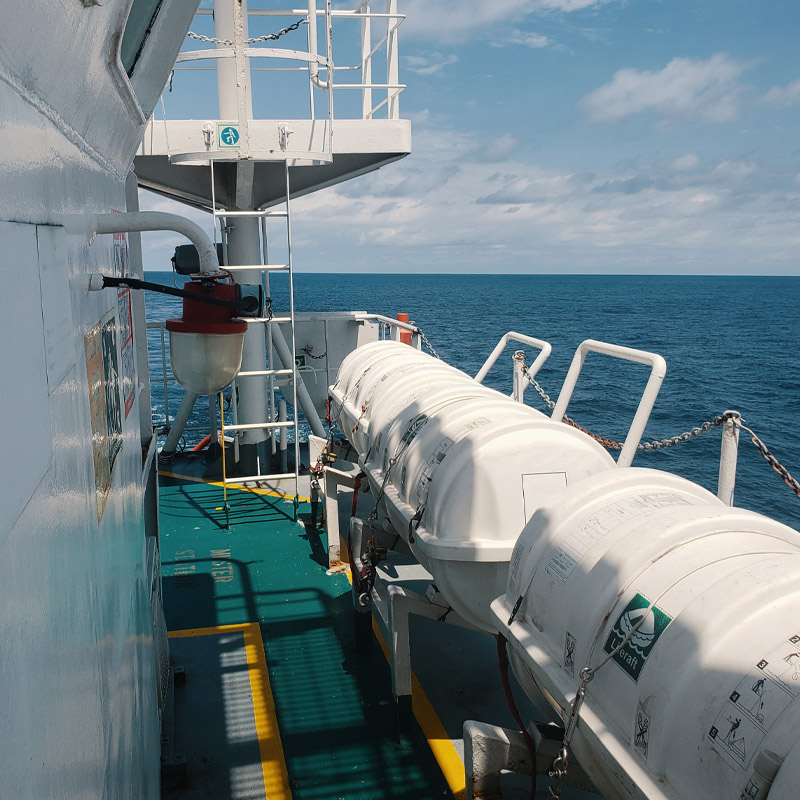
Life raft servicing is a mandatory requirement under the International Convention for the Safety of Life at Sea (SOLAS) and plays a vital role in ensuring life-saving equipment functions reliably during emergencies. Commercial vessels rely on life rafts as the line of defense when evacuation becomes necessary, making regular inspections and maintenance critical for the safety of crew and passengers.
Routine life raft servicing not only helps shipowners comply with international maritime regulations but also identifies potential defects before they compromise the raft's performance. In this guide, we'll explain the complete life raft servicing procedure, inspection intervals, mandatory tests and best practices to help shipowners, operators and crew maintain compliance and operational readiness.
What is Life Raft Servicing?
Life raft servicing is the process of inspecting, testing, repairing, and certifying inflatable life rafts at an authorized service station. The objective is to verify that the life raft, its accessories, and its launching equipment remain in optimum condition and are capable of performing as intended during an emergency.
A standard servicing procedure typically includes:
- Visual inspection of the life raft container
- Inflation and pressure testing
- Inspection of the emergency equipment pack
- Examination of buoyancy chambers
- CO2 cylinder inspection and weighing
- Hydrostatic Release Unit (HRU) verification (where applicable)
- Repair of damaged components
- Documentation and certification
Why is Life Raft Servicing Important?
Life rafts are designed to save lives during emergencies such as fire, flooding, collision, grounding, or vessel abandonment. However, prolonged exposure to harsh marine environments can cause deterioration of the raft, its components, and emergency equipment.
Regular servcing helps to:
- Ensure compliance with SOLAS and IMO requirements
- Detect hidden defects before they become critical
- Verify proper inflation and buoyancy
- Extend the service life of the equipment
- Improve crew safety during emergencies
- Reduce the risk of Port State Control deficiencies
SOLAS Requirements for Life Raft Servicing
Adherence to life raft servicing procedures is not merely a matter of compliance with regulations that meet the SOLAS standards and requirements; it's a matter of life and death at sea. Proper servicing ensures that life rafts remain fully functional and reliable, ready to deploy in the most challenging circumstances. To safeguard lives on the open sea, strict adherence to life raft servicing guidelines is paramount.
Life Raft Servicing Procedures: Step-by-Step Checklist
A comprehensive life raft servicing procedure involves several inspection and testing stages.
1. External Container Inspection
The servicing process begins with a thorough inspection of the container.
Technicians examine:
- Container condition
- Corrosion or damage
- Security of sealing arrangements
- Container identification markings
- Hydrostatic Release Unit installation (if fitted) '
Any signs of deterioration are addressed before proceeding.
2. Life Raft Inflation Test
The life raft is carefully inflated under controlled conditions to verify:
- Inflation system performance
- Buoyancy chamber integrity
- Canopy condition
- Boarding arrangements
- Internal fittings
- Structural stability
The raft must inflate completely within the specified time.
3. General Inspection (GI) Tests
A detailed inspection is carried out on all critical components, including:
- Inflation valves
- Pressure relief valves
- Floor construction
- Boarding ladder
- Painter line
- Sea anchor
- Buoyancy tubes
- Internal lighting
- External lights
- Reflective tapes
- Emergency equipment pack
Any worn or damaged components are repaired or replaced.
4. Pressure Retention Test
The inflated life raft is left under pressure for a specified period to verify that no air leakage occurs.
This test confirms:
- Air tight buoyancy chambers
- Valve integrity
- Seam condition
- Overall structure performance
5. Floor Seam Test
The floor seam is inspected to identify:
- Delamination
- Cracks
- Separation
- Material degradation
Maintaining floor integrity ensures occupant comfort, insulation and buoyancy.
6. Emergency Equipment Inspection
Every emergency equipment pack is opened and inspected.
Typical contents include:
- Flares
- Drinking Water
- Food rations
- First aid kit
- Repair kit
- Paddles
- Torch
- Sea sickness tablets
- Sponge
- Floating knife
Expired or damaged items are replaced with approved equipment.
7. CO2 Cylinder Inspection
The inflation cylinder is inspected for:
- Correct weight
- Corrosion
- Valve condition
- Certification validity
- Leakage
The cylinder is replaced or serviced if required.
8. Life Raft Repairs and Container Maintenance
If defects are identified during servicing, approved repair procedures are carried out using manufacturer-approved materials and techniques.
9. Final Certification
Once servicing has been successfully completed, the life raft is repacked, sealed and certified.
Documentation generally includes:
- Service certificate
- Inspection report
- Test results
- Replacement records
- Next service due date
Proper documentation is essential for statutory surveys and PSC inspections.
Common Life Raft Deficiencies Found During Servicing
During inspections, technicians frequently encounter issues such as:
- Damaged containers
- Corroded CO2 cylinders
- Air leakage
- Worn inflation valves
- Expired emergency equipment
- Damaged canopy fabric
- Faulty internal lights
- Missing accessories
- Deteriorated painter lines
- Incorrect packing
Identifying these problems early helps prevent equipment failure during emergencies.
Best Practices for Shipowners and Operators
To maximise safety and regulatory compliance:
- Schedule servicing before the due date.
- Use only manufacturer-approved service stations.
- Maintain complete servicing records.
- Conduct regular onboard visual inspections.
- Replace expired emergency equipment promptly.
- Ensure crew members understand liferaft launching procedures.
- Follow the manufacturer's maintenance recommendations.
Why Choose Marinetech for Life Raft Servicing?
Marinetech Safety Pvt. Ltd. provides professional life raft inspection, servicing, testing, repairs and certification in accordance with SOLAS requirements and manufacturer guidelines.
Our experienced technicians are approved by leading life raft manufacturers and recognized by major classification societies, enabling us to service a wide range of inflatable life rafts used on commercial vessels worldwide.
Our life raft servicing capabilities include:
- Annual inspections
- Inflation and pressure testing
- Emergency equipment replacement
- Container maintenance
- Repairs using approved procedures
- Certification and documentation
- Compliance with SOLAS,IMO and classification society requirements
Conclusion
Life raft servicing is more than a regulatory requirement, it's a critical investment in the safety of your crew, passengers, and vessel. Regular inspections, testing, and maintenance help ensure that every life raft performs reliably when it is needed most while maintaining compliance with SOLAS and IMO standards.
At Marinetech Safety Pvt. Ltd., we provide comprehensive liferaft servicing backed by experienced technicians, manufacturer approvals, and class-recognised expertise. Whether you require annual inspections, repairs, testing, or certification, our team is committed to delivering reliable, compliant, and high-quality marine safety solutions.
Need professional life raft servicing? Contact Marinetech Safety Pvt. Ltd. today to schedule your inspection and ensure your vessel remains safe, compliant, and ready for every voyage.
Frequently Asked Questions (FAQs)
Q. How often should a life raft be serviced?
A. Inflatable life rafts are generally serviced every 12 months by an authorized service station, although servicing intervals may vary depending on the manufacturer and applicable regulations.
Q. Who is authorized to service a life raft?
A. Only manufacturer-approved service stations with trained technicians should carry out liferaft servicing.
Q. What happens during a life raft servicing inspection?
A. The servicing process includes container inspection, inflation testing, pressure testing, emergency equipment inspection, cylinder inspection, repairs (if required), repacking, and certification.
Q. Which ports does Marinetech provide life raft servicing at?.
A. Marinetech Safety Pvt. Ltd. provides authorized life raft servicing at major ports across India, including Mumbai, Nhava Sheva (JNPT), Kandla, Mundra, Pipavav, Hazira, Dahej, Goa, Mangalore, Kochi, Chennai, Ennore, Visakhapatnam, Paradip, Haldia, Kolkata, Tuticorin, Dhamra, Kakinada, Vadinar and Sikka. Our experienced technicians deliver SOLAS-compliant inspection, testing, repairs, and certification to help vessels maintain safety and regulatory compliance with minimal operational downtime.