Blog Post
Flag State Surveys & ISM / ISPS Audits for Ships in India 2026: Complete Guide
Posted By: Harsh Bamnolia
Posted On : 25-Jun-2026
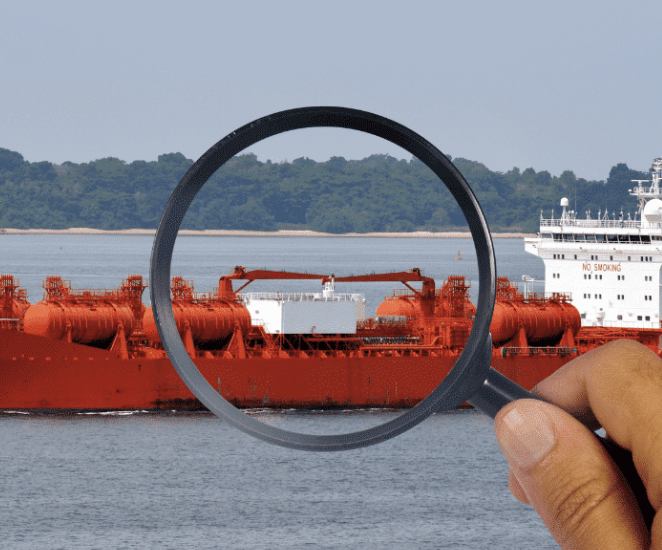
Flag State Surveys & ISM / ISPS Audits for Ships in India 2026: Complete Guide
Every SOLAS vessel operates under a framework of statutory surveys and audits that together verify the vessel is safe, compliant, and fit for its intended trade. These surveys are not optional and they are not bureaucratic formalities — they are the mechanism by which flag states, classification societies, and port state control authorities maintain confidence in the safety and environmental standards of the global fleet.
For ship owners and managers with vessels calling at Indian ports or registered under Indian flag, understanding the survey and audit framework — what each survey covers, who conducts it, when it falls due, and what happens if it lapses — is a fundamental operational requirement. This guide covers the complete flag state survey regime, ISM Code audits, ISPS Code verifications, and how Marinetech supports vessels through the survey process at Indian ports.
What Is a Flag State Survey?
A flag state survey is an official inspection conducted by or on behalf of the government of the country where a vessel is registered — its flag state. The purpose of the survey is to verify that the vessel meets the international conventions — primarily SOLAS, MARPOL, and the Load Line Convention — that the flag state is a party to, and to issue or renew the statutory certificates that demonstrate compliance.
In practice, most flag states do not conduct surveys directly through government surveyors. They delegate survey authority to recognised organisations — typically the major classification societies — who act as the flag state's authorised representative. When a DNV GL surveyor conducts an annual survey on a Panama-flag vessel, they are acting both as a class society surveyor (on behalf of DNV GL) and as a recognised organisation (on behalf of Panama). The certificates they issue carry the authority of the flag state.
In India, the Directorate General of Shipping is the flag state authority for Indian-flag vessels. DGS delegates survey functions to the Indian Register of Shipping and other recognised organisations for routine statutory surveys, while retaining direct oversight of port state control and crew certification.
Types of Flag State Surveys
The statutory survey cycle for a SOLAS vessel is built around a five-year certificate period with annual and intermediate surveys required between full renewal surveys.
Initial Survey
The initial survey is conducted when a vessel is newly built or when it is registered under a new flag for the first time. It is the most comprehensive survey in the cycle — covering the vessel's entire structure, machinery, equipment, stability, fire safety systems, life-saving appliances, and radio equipment against the applicable convention requirements. Successful completion of the initial survey results in the issue of the full suite of statutory certificates for a five-year period.
For vessels transferring between flag states, a transfer survey verifies the vessel against the new flag state's requirements before the certificates are re-issued.
Annual Survey
The annual survey is conducted within three months before or after the anniversary date of the initial survey each year. It is a thorough inspection verifying that the vessel and its equipment remain in a satisfactory condition and that no changes have been made that would affect compliance with the applicable conventions.
For LSA and FFA equipment specifically, the annual survey includes verification that annual inspection certificates are current for lifeboats, liferafts, fire fighting appliances, GMDSS equipment, and VDRs. This is why maintaining current service certificates from approved providers — as covered throughout the Marinetech blog series — is not merely a PSC requirement but a class and flag state survey requirement as well.
Intermediate Survey
The intermediate survey is conducted at the second or third anniversary of the vessel, in lieu of an annual survey at that point. It is more thorough than an annual survey — in particular, the hull and structure are examined in more detail, and machinery spaces are inspected more comprehensively. For vessels on an enhanced survey programme (ESP) — primarily bulk carriers and oil tankers — the intermediate survey includes close-up surveys of specified structural areas that are prone to corrosion or fatigue.
Renewal Survey (Five-Yearly)
The renewal survey, conducted at the five-year anniversary of the initial survey, is the most comprehensive periodic survey. It covers the full range of convention requirements across all systems — hull and structure, machinery, fire safety, life-saving appliances, radio equipment, and environmental compliance. Successful completion results in the renewal of all statutory certificates for a further five years.
The renewal survey is typically the primary trigger for the five-yearly lifeboat overhaul, the liferaft service, the BWMS annual review, and other major compliance services. Planning the renewal survey with sufficient lead time to address any identified deficiencies before the certificate expiry date is one of the most important fleet management tasks a superintendent can undertake.
The Safety Management Certificate and ISM Code Audits
The International Safety Management Code — the ISM Code — is a mandatory management standard for the safe operation of ships and pollution prevention, implemented under SOLAS Chapter IX. Every company operating SOLAS vessels must have an approved Safety Management System in place, and every vessel must carry a Safety Management Certificate confirming that the shipboard SMS has been audited and found compliant.
The ISM certification cycle operates separately from the vessel's class certification cycle. It involves two levels — the Document of Compliance issued to the company, and the Safety Management Certificate issued to each individual vessel.
Document of Compliance (DOC)
The DOC is issued to the shipping company — not to the vessel. It certifies that the company's Safety Management System meets the requirements of the ISM Code. The DOC covers specific ship types — a company with a DOC for bulk carriers cannot operate tankers under that DOC without the tanker ship type being added. The DOC has a five-year validity with annual verification audits.
Annual verification audits of the DOC involve an inspection of the company's shore-based SMS implementation — the safety management procedures, the designated person ashore system, the non-conformity and near-miss reporting systems, the vessel inspection programme, and the training and familiarisation records.
Safety Management Certificate (SMC)
The SMC is issued to each individual vessel and certifies that the vessel's safety management is being implemented effectively in accordance with the company's approved SMS. The SMC has a five-year validity with an intermediate verification audit at the second or third year.
The intermediate audit — and the renewal audit — involve both an examination of the shipboard SMS documentation and a practical assessment of how effectively the SMS is being implemented by the crew. This is where the quality of drill records, maintenance logs, non-conformity records, and familiarisation records determines the audit outcome. A vessel with complete, consistent, and genuine records passes the ISM audit with minimal findings. A vessel where records are incomplete or inconsistent typically receives non-conformities that must be closed before the certificate can be issued.
ISM Non-Conformities and Their Consequences
An ISM non-conformity is a finding that the vessel's safety management is not being implemented in accordance with the approved SMS. Non-conformities are categorised as major or minor. A major non-conformity — indicating a significant failure of the SMS that poses an immediate risk to safety or the environment — prevents the issue of the SMC until it is closed. Minor non-conformities must be closed within a specified timeframe.
PSC officers treat ISM-related deficiencies as some of the most serious findings during port inspections — an ISM deficiency is always detainable. The connection between ISM non-conformities found during audits and ISM deficiencies found during PSC inspections is direct: both are looking at the same question from different angles — is this vessel's safety management system genuinely functional?
ISPS Code Verification
The International Ship and Port Facility Security Code — the ISPS Code — is mandatory under SOLAS Chapter XI-2 for cargo ships of 500 GT and above, high-speed craft, mobile offshore drilling units, and port facilities. It establishes a framework for international maritime security requiring ships and port facilities to assess and implement security plans.
Every ISPS-compliant vessel must carry an International Ship Security Certificate confirming that the vessel's ship security plan has been verified and found compliant. The ISSC has a five-year validity with intermediate verifications at the second or third year.
The ISSP verification covers the implementation of the ship security plan — the security watch arrangements, access control procedures, restricted area controls, security drills and exercises, security equipment maintenance, and the ship security officer's performance of their duties. PSC officers check the ISSC validity and may conduct a security inspection to verify that the plan is being implemented in practice.
A lapsed ISSC or an ISSC issued by an organisation not recognised by the flag state is a serious statutory deficiency. Ensure the ISSC renewal is tracked as carefully as any other statutory certificate.
How Marinetech Supports Flag Surveys and Audits in India
Marinetech Safety & Shipping Corporation supports vessels through the flag state survey and ISM/ISPS audit process in India primarily through ensuring that all LSA, FFA, GMDSS, and VDR service certificates are current and compliant when the vessel approaches its survey date.
A significant proportion of annual survey and renewal survey deficiencies arise not from structural or machinery failures but from LSA and FFA service lapses — lifeboat annual certificates that have lapsed, liferaft certificates from non-approved service stations, GMDSS radio survey certificates that are approaching expiry, or VDR APT certificates that have not been renewed. These are all preventable with systematic advance planning.
Marinetech provides certified lifeboat inspection and servicing, liferaft annual servicing, fire fighting appliances inspection, GMDSS radio surveys, and VDR annual performance testing — the five core compliance services that must be current and documented for a clean annual survey, intermediate survey, and renewal survey outcome at any Indian port.
For vessels approaching a renewal survey at a class society with an Indian office — IRS, DNV GL India, Bureau Veritas India, Lloyd's Register India, ABS India, or others — Marinetech's service documentation is produced in the format and to the standard that each society's surveyors require. We are recognised by all major class societies operating in India, meaning our certificates are accepted without reservation at any renewal or annual survey conducted here.
For vessels undergoing ISM audits in India, Marinetech can advise on ensuring LSA and FFA maintenance records are complete and appropriately documented for the audit. While we do not conduct ISM audits ourselves, the maintenance records we produce for every service — inspection reports, statements of fitness, and updated maintenance record cards — are exactly the documentation that an ISM auditor reviews when assessing the effectiveness of the vessel's planned maintenance system.
Flag State Surveys for Indian-Flag Vessels
For vessels registered under Indian flag, the DGS exercises direct oversight through IRS and designated surveyors. Indian-flag vessels must have all surveys conducted by or through IRS or another DGS-recognised organisation. DGS-approved service providers — such as Marinetech — are specifically required for LSA and FFA work on Indian-flag vessels, making our DGS approval directly relevant to this vessel category.
Indian-flag vessels also face DGS inspection visits separate from class society surveys — DGS conducts its own oversight of vessels registered under its administration, particularly in the areas of crew certification, STCW compliance, and living conditions under MLC 2006. While Marinetech's services are not directly relevant to these inspection areas, maintaining clean LSA and FFA records reduces the overall compliance risk profile of Indian-flag vessels facing DGS inspection visits.
Frequently Asked Questions
What is the difference between a class society survey and a flag state survey?
A class society survey is conducted by the classification society to maintain the vessel's class — confirming it meets the society's structural and machinery standards. A flag state survey is conducted on behalf of the government where the vessel is registered to confirm compliance with international conventions. In practice, most flag states authorise class societies to conduct statutory surveys on their behalf, meaning the same surveyor may conduct both in a single visit.
How far in advance should we plan for a renewal survey?
Ideally 6 to 12 months in advance. The renewal survey involves the most comprehensive inspection in the certificate cycle, and any deficiencies found must be rectified before the certificates can be renewed. LSA and FFA service requirements need to be coordinated with the survey date — particularly the five-yearly lifeboat overhaul which must align with the five-year class renewal cycle.
What happens if a statutory certificate lapses?
A vessel with a lapsed statutory certificate is unseaworthy under international law and must not proceed to sea. A lapsed certificate is immediately detainable at any PSC inspection. Contact your class society and flag state immediately if a certificate is approaching its expiry date without a renewal survey having been completed.
Does Marinetech conduct ISM or ISPS audits?
Marinetech does not conduct ISM or ISPS audits — these are conducted by classification societies and flag state recognised organisations. However, Marinetech's service documentation is specifically designed to meet the requirements of ISM planned maintenance system records, and our certificates are accepted at annual, intermediate, and renewal surveys by all major class societies in India.
Can Marinetech coordinate LSA and FFA services to align with a vessel's survey date?
Yes. We regularly coordinate service schedules with vessels approaching annual surveys, intermediate surveys, and renewal surveys, ensuring all LSA and FFA certificates are current before the survey date. Contact us with your vessel's survey dates and we will schedule services to avoid any certificate lapse at survey.
Which class societies does Marinetech work with in India?
Marinetech is recognised by ABS, DNV GL, Bureau Veritas, Lloyd's Register, IRS, NKK, RINA, CCS, and Korean Register — all major class societies conducting surveys in India. View our full approvals and class society recognition certificates.
Support Your Survey Programme with Marinetech
Contact Marinetech Safety & Shipping Corporation to discuss your vessel's survey programme and schedule LSA, FFA, GMDSS, and VDR services aligned with your annual, intermediate, or renewal survey dates at any major Indian port.
Services email: info@marinetechss.com
Phone: +91-8866475732 | +91-72270 38216
View Our Class Society Approvals
Related reading: How to Prepare for a PSC Inspection: Checklist 2026 | Top 10 PSC Deficiencies That Lead to Ship Detention | Certified Lifeboat Servicing in India 2026 | Choosing a DG Shipping Approved Marine Company in India