Blog Post
Cargo Gear Load Testing in India: Requirements, Process & How Marinetech Helps
Posted By: Harsh Bamnolia
Posted On : 25-Jun-2026
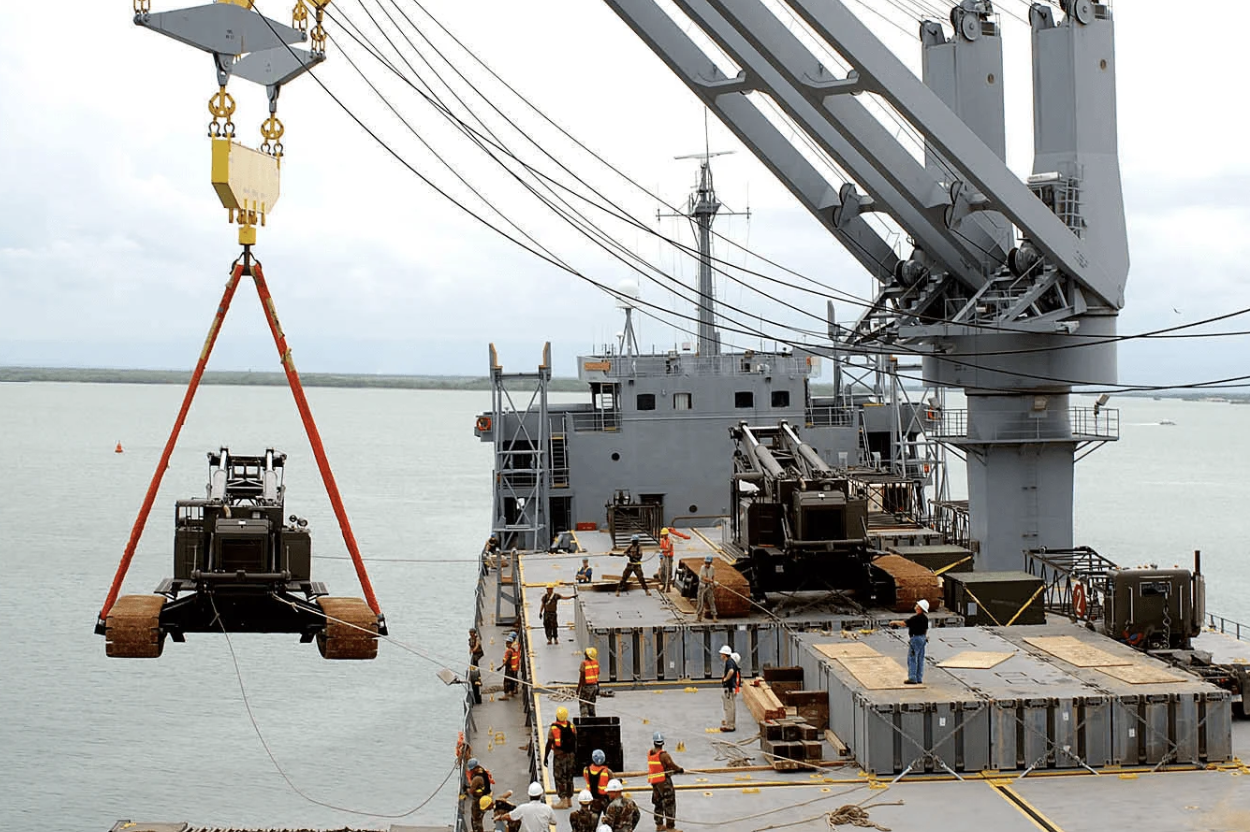
Cargo Gear Load Testing in India: Requirements, Process & How Marinetech Helps
Cargo gear — the cranes, derricks, winches, and lifting appliances fitted to ships for loading and unloading cargo — is some of the most heavily used equipment on any vessel. It is also among the most dangerous when it fails. A crane that drops a load, a derrick that collapses under a lift, a winch wire that parts under tension — these are not abstract risks. They are real casualties that have killed dock workers, seafarers, and shore-side personnel at ports around the world.
Cargo gear load testing exists to prevent exactly these outcomes. Periodic proof load testing of every lifting appliance — testing each piece of equipment to a load above its safe working limit to demonstrate it can withstand operational demands without failure — is a mandatory requirement under Indian law, international convention, and the requirements of every major classification society. Vessels calling at Indian ports with cargo gear that is overdue for testing, or that has not been tested by an authorised provider producing class-acceptable certification, face deficiency findings from PSC officers and class surveyors.
This guide covers the legal framework for cargo gear load testing in India, exactly what the testing process involves, how frequently it is required, and how Marinetech provides certified cargo gear load testing across India's major ports.
The Legal Framework: Indian Cargo Register and Dock Workers Safety Regulations
Cargo gear load testing in India is governed by two primary regulatory instruments that operate alongside each other and must both be satisfied for a vessel's lifting appliances to be considered compliant when operating at Indian ports.
The Indian Cargo Gear Register — maintained under the Merchant Shipping Act and administered through the Mercantile Marine Department — is the Indian-law requirement for the registration, testing, and certification of cargo gear on vessels operating in Indian ports. Every cargo handling device on a vessel calling at an Indian port — cranes, derricks, winches, blocks, shackles, wire ropes, and associated fittings — must be registered in the Cargo Gear Register and must have a current test and examination certificate. The Cargo Gear Register must be produced on demand at any Indian port and is checked by DGS surveyors and port authorities as part of port admission procedures.
The Dock Workers (Safety, Health and Welfare) Regulations — administered by the Ministry of Labour and Employment — set additional requirements for lifting appliances used in dock operations. These regulations specify testing intervals, load factors, and documentation requirements for all equipment used to handle cargo at Indian ports and docks. Compliance with these regulations is verified by the Director General of Labour and local factory inspectorate authorities at major Indian ports.
Beyond Indian domestic law, classification societies — ABS, DNV GL, Lloyd's Register, Bureau Veritas, IRS, and others — set their own requirements for cargo gear testing as part of the vessel's class maintenance. Class requirements typically align with the Indian Cargo Gear Register requirements but may impose additional intervals or load factors for specific equipment types.
What Equipment Requires Load Testing
The scope of cargo gear load testing covers all mechanical lifting appliances fitted on or used in connection with the vessel for cargo handling purposes. In practice this means every crane, every derrick and derrick boom, every winch used for cargo handling, and every set of blocks, shackles, swivels, rings, links, and wire ropes that forms part of the cargo handling rig.
Ship cranes are the dominant cargo handling device on modern general cargo vessels, multipurpose vessels, and many bulk carriers. A typical cargo crane comprises the crane structure, the slewing ring, the hoisting system, the luffing system, and the crane hook and swivel. Each of these elements must be tested as part of the load test programme.
Derrick systems — increasingly uncommon on modern vessels but still found extensively on older general cargo ships, timber carriers, and some specialist vessel types — comprise the derrick boom, the topping lift, the guy wires, the cargo runner, and the associated winches and blocks. The complexity of a derrick rig means load testing involves multiple test configurations to cover all possible rigging arrangements.
Hatch covers fitted with integral lifting arrangements, ship's gangways where these are motorised or mechanical, and any other mechanical device used to lift or lower cargo, stores, or persons must also be included in the register and subject to periodic examination. Hydraulic hatch cover lifting systems are specifically included where cranes are used to position hatch covers.
Testing Intervals: How Frequently Must Cargo Gear Be Tested?
The testing intervals for cargo gear in India are set by the Indian Cargo Gear Register requirements in conjunction with the applicable class society requirements. The standard intervals are as follows.
Proof load testing — the full load test where the appliance is tested to a specified proof load above its safe working limit — is required every 4 years for most cargo handling equipment. This is the primary structural integrity test confirming the appliance can withstand loads above its operational limit without permanent deformation or failure.
Annual thorough examination — a detailed physical inspection of every component of every lifting appliance, including the structure, mechanical components, wires, ropes, blocks, and fittings — is required every 12 months. The annual examination does not necessarily involve a physical load test but must be conducted by a competent person who produces a formal examination report confirming the safe condition of all inspected equipment.
Six-monthly examination — a visual inspection of the cargo gear arrangement, checking for obvious defects, wear, corrosion, or damage — is required every 6 months and may be conducted by the ship's own competent officer where the class society permits this for the relevant equipment type.
Wire rope and chain inspections are required at shorter intervals than the appliance itself — wire ropes used in cargo handling must be examined regularly and replaced based on discard criteria set by the wire manufacturer and the applicable class society rules.
The Load Test Process: What Marinetech's Engineers Do
A proof load test conducted by Marinetech's certified cargo gear engineers follows a systematic process covering every element of the lifting appliance from foundation to hook.
Pre-Test Documentation Review: The engineer begins by reviewing the vessel's Cargo Gear Register, the previous test certificates, and the specification data for each appliance to be tested. This establishes the safe working load (SWL) for each appliance and determines the proof load — typically 25% above SWL for most appliances, following the standard formula in the Indian Cargo Gear Register requirements.
Physical Pre-Test Inspection: Before any load is applied, every component of the appliance is physically inspected. The crane structure or derrick boom is checked for corrosion, deformation, or crack indications. The hoisting and luffing machinery is inspected for wear, lubrication, and condition. Wire ropes are inspected for broken wires, kinks, corrosion, and wear against discard criteria. Blocks, shackles, hooks, and swivels are inspected for wear, deformation, and crack indications. Any component found deficient at this stage must be repaired or replaced before the load test proceeds.
Load Application: Proof load is applied using calibrated test weights or hydraulic test equipment. The load is applied progressively — not suddenly — to the specified proof load and held for a defined period. During load application, the engineer monitors the appliance for any signs of distress — unusual noise, visible deformation, component movement, or hydraulic system response outside expected parameters.
Post-Test Inspection: After the proof load is removed, every component is inspected again to identify any permanent deformation, crack propagation, or other damage caused by or revealed by the test load. Components that show permanent deformation after proof testing are condemned and must be replaced before the appliance returns to service.
SWL Marking: After successful testing, the safe working load is marked on the appliance — on the crane structure, the derrick boom, the block, and other load-bearing components as required by the Indian Cargo Gear Register and class requirements.
Certificate Issuance: A test certificate is issued for each appliance tested, identifying the appliance by description and serial number, the safe working load, the proof load applied, the date of the test, the name and authorisation of the testing engineer, and the next test due date. The certificate is entered into the vessel's Cargo Gear Register. The Cargo Gear Register is then updated with all current test dates and next-due dates.
Who Is Authorised to Conduct Cargo Gear Load Testing in India?
Cargo gear load testing in India must be conducted by a competent person — specifically, a person with the technical knowledge, experience, and authorisation to assess lifting appliances against the applicable standards. In practice, this means an engineer who is recognised by the relevant class society and who holds the necessary authorisation under Indian law for the type of equipment being tested.
For class survey purposes, the test certificate must be issued by an engineer or organisation recognised by the vessel's classification society. For Indian Cargo Gear Register purposes, the testing must be conducted by a person authorised under the applicable provisions of the Merchant Shipping Act and Dock Workers Safety Regulations.
Marinetech's cargo gear engineers are authorised and class-recognised for cargo gear load testing across all major Indian ports, producing test certificates accepted by all major classification societies and recognised for Indian Cargo Gear Register purposes. View our full class society approvals.
Ports Where Marinetech Provides Cargo Gear Load Testing
Marinetech provides certified cargo gear load testing across all major Indian ports where cargo-handling vessels operate. On the west coast we cover Mumbai and JNPT for the container and general cargo sector, Kandla and Mundra for bulk cargo, Hazira and Dahej for the petrochemical sector, Cochin for the Kerala coast trade, and Goa. On the east coast we cover Chennai and Ennore, Visakhapatnam (Vizag) for the eastern bulk sector, Kolkata and Haldia for Bay of Bengal operations, and Paradip.
For vessels calling at smaller ports or terminals not listed here, contact us with advance notice and we will arrange cargo gear testing coverage through our regional engineer network.
Scheduling Cargo Gear Testing Alongside Other Services
Cargo gear load testing can be coordinated with other Marinetech services — lifeboat inspection, liferaft servicing, fire fighting appliances inspection, GMDSS surveys, and VDR testing — in a single port call where the vessel's schedule permits. Consolidating multiple compliance services with a single provider reduces coordination overhead, produces integrated documentation for class survey review, and minimises the total time engineers are on board. Contact us to discuss a combined service plan for your next Indian port call.
Frequently Asked Questions
How often must cargo gear be proof load tested in India?
Every 4 years for most standard cargo handling appliances, in accordance with Indian Cargo Gear Register requirements and applicable class society rules. Annual thorough examinations are required every 12 months between proof load tests, and 6-monthly visual examinations are also required.
What proof load is applied during a cargo gear load test?
The standard proof load for most cargo handling appliances is 125% of the safe working load — that is, 25% above the SWL marked on the appliance. Some appliance types have different proof load factors set by the manufacturer or applicable standard. Marinetech's engineers calculate the correct proof load for each appliance from the specification data before testing begins.
What happens if a component fails during the load test?
The test is stopped immediately. The failed component is condemned and must be replaced before the appliance returns to service. A repair or replacement inspection and retest is then conducted before a test certificate can be issued. Marinetech advises on repair or replacement options and can coordinate the follow-up test at the same port call where possible.
Can the ship's crew conduct the annual thorough examination?
In some cases, class society rules permit a competent officer — a person with specific training and experience in cargo gear examination — to conduct the 6-monthly visual examination. The annual thorough examination and proof load tests must be conducted by an authorised external engineer producing class-acceptable certification. Check with your class society for the specific requirements applicable to your vessel and cargo gear type.
Does Marinetech provide cargo gear load testing for all crane and derrick types?
Yes. Our engineers are experienced with all major cargo handling configurations found on vessels at Indian ports — ship cranes from all major manufacturers, conventional derrick rigs, and associated rigging components. When booking, provide a list of all lifting appliances to be tested so we can confirm engineer qualification and equipment requirements.
Is the Cargo Gear Register the same as the Safety Equipment Certificate?
No. The Cargo Gear Register is a separate document from the Safety Equipment Certificate. The Safety Equipment Certificate covers life-saving and fire safety appliances. The Cargo Gear Register covers all cargo handling lifting appliances. Both must be maintained and available for inspection at Indian ports.
Book Cargo Gear Load Testing in India
Contact Marinetech Safety & Shipping Corporation to schedule cargo gear proof load testing or annual thorough examination at any major Indian port. Provide the vessel name, port and expected arrival date, and a list of cargo handling appliances to be tested, and we confirm availability and cost estimate within 24 hours.
Services email: info@marinetechss.com
Phone: +91-8866475732 | +91-72270 38216
Get a Free Quote for Cargo Gear Load Testing
Related reading: How to Prepare for a PSC Inspection: Checklist 2026 | Flag State Surveys & ISM/ISPS Audits for Ships in India | Certified Lifeboat Servicing in India 2026 | Choosing a DG Shipping Approved Marine Company in India